Get Full Government Meeting Transcripts, Videos, & Alerts Forever!
Get email alerts on the School Safety topic
No spam. Unsubscribe anytime.
Nash County schools describe security investments, but full coverage and costs remain unsettled
Summary
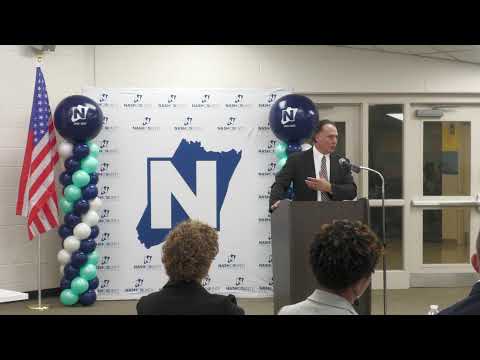
Dr. Leon Desphere Dream, associate superintendent for Nash County Public Schools, told the Oct. 28 joint meeting that the district has layered physical and digital safety measures across its schools, including cameras, panic buttons and weapon-detection systems.
Dr. Leon Desphere Dream, associate superintendent for Nash County Public Schools, told the joint meeting Oct. 28 that the district has layered physical and digital safety measures across its schools, including cameras, access control on exterior doors, emergency "red panic buttons" tied to a 911 call flow, and a Lightspeed filtering system for district devices.
"We have cameras. We have access control for all of our exterior doors. We have SROs in all of our schools. We have safety drills," Dream said, summarizing the district's approach to school safety and noting districtwide anonymous reporting and school-based mental-health services.
Why it matters: district leaders said these measures are intended to reduce risk and speed response but are not foolproof. Dream emphasized mental-health interventions and risk assessment protocols alongside technical systems.
Details and costs: Dream reported the district installed Evolve weapon-detection systems in middle and high schools under a lease in 2023–24; the district later purchased weapon-detection units for 12 elementary schools for just under $1 million this year. He said replacing classroom door locks at the middle- and high-school level with the same safe-vault locks used in elementary classrooms would cost an estimated $825,000 for purchase and installation.
Staffing and grants: Dream described SRO coverage across the district (7 high-school SROs with some shared off-duty coverage; 4 middle-school SROs; 7 elementary SROs with one officer sometimes covering two schools; additional floating officers provided by city and county departments). He said the district was awarded Center for Safer Schools grants of $484,000 for both 2024–25 and 2025–26; those grants funded some SRO positions but did not fully cover total SRO costs. "For SRO costs for the 2024–25 school year, the approximate cost was about $1,609,000 and $103.04," he said.
Questions from commissioners focused on procedures and limits: officials clarified that classroom safe-vault locks allow students and staff to exit rooms without unlocking from outside; Lightspeed filtering applies to school devices and district-managed Internet access, not personal cell phones; and parental consent is generally required for certain mental-health interventions unless law enforcement is involved.
What remains unresolved: Dream said the district would need approximately $2 million to staff a full-time SRO at every school and that some safety investments (for example, safe-vault locks in middle and high schools) depend on budget availability. He also warned that no single measure guarantees safety and urged vigilance and reporting by staff, students and families.
Ending: District leaders asked the county and school boards to consider safety funding in upcoming budget discussions and to continue grant-seeking to partially offset recurring SRO costs and one-time capital needs.