
Kent schools report 7,854 multilingual learners across 135 languages; officials warn Title III federal funding could fall
Get AI-powered insights, summaries, and transcripts
Subscribe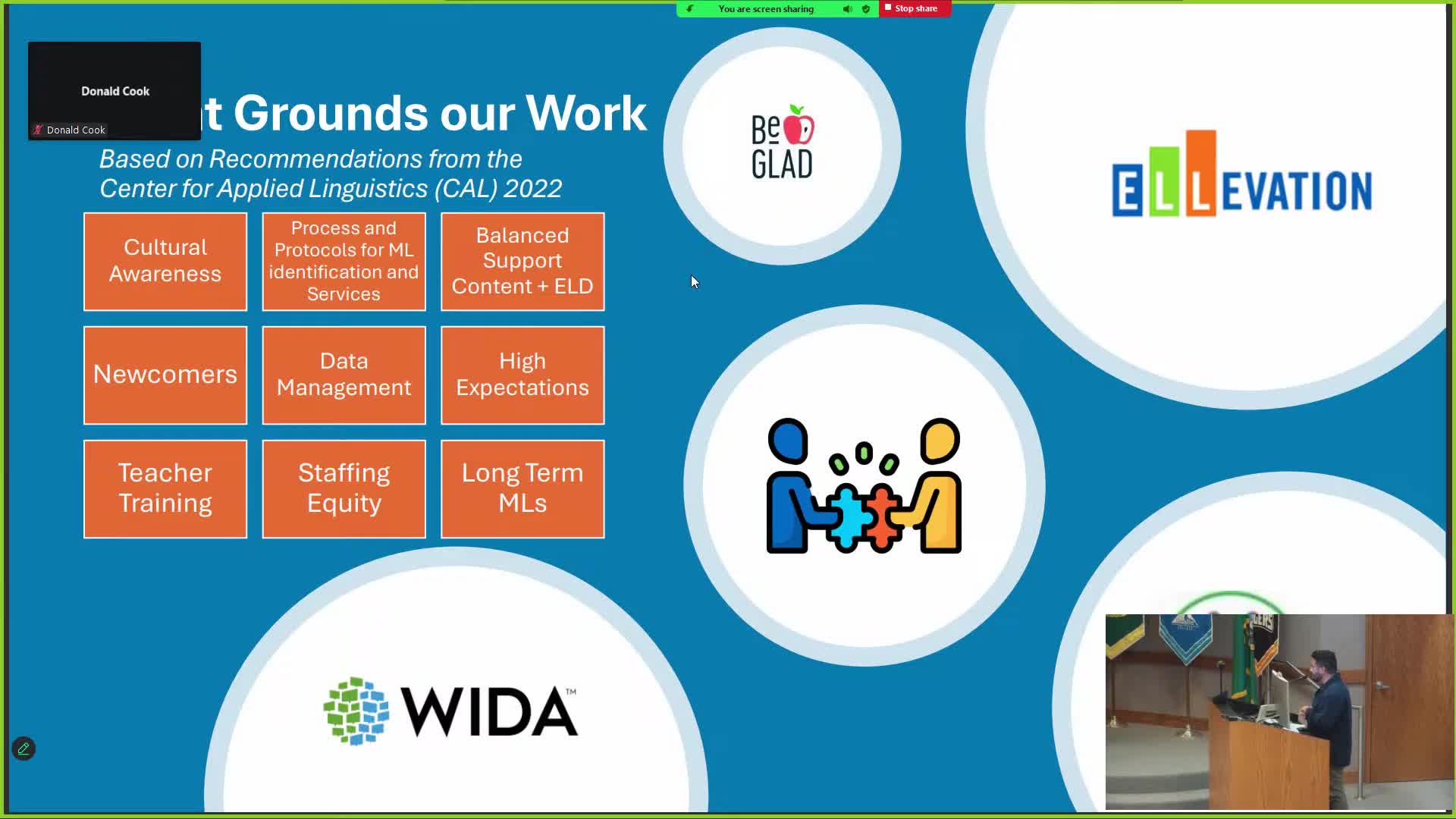
Summary
District staff reported 7,854 multilingual learners across 135 languages and outlined models and professional learning; finance staff warned the district’s assumed $1 million Title III allocation could be reduced substantially under one federal scenario.
Kent School District multilingual education leaders briefed the board on program scale, models and supports for multilingual learners and flagged a possible federal funding reduction.
Assistant Director Gamy Diaz presented the Transitional Bilingual Instructional Program (TBIP) update, saying the district’s October 1 count identified 7,854 multilingual learners, roughly 31.1% of students, and that the multilingual program includes approximately 135 languages (Spanish was the largest group with Dari, Ukrainian, Pashto and Punjabi among the next most‑represented). Staff described the three OSPI‑approved program models the district operates: dual language (K–12 bilingual instruction), supportive mainstream services (inclusion with ELD supports) and secondary sheltered/content‑based classes where students receive integrated content and ELA credit.
The presentation covered professional learning tied to the WIDA English language development standards, an initiative to roll out GLAD instructional strategies, and use of the Elevation data platform to track multilingual students' progress. Diaz and others said the district is increasing teacher and paraeducator staffing to meet rising enrollment.
During questions finance staff told trustees the board’s adopted budget included $1 million for Title III; under one federal proposal staff are modeling, that amount could be reduced by roughly 70% (about $700,000). The superintendent and program staff emphasized that Title III and federal funds are supplemental and that any cut would increase pressure on local staffing and materials for multilingual services. Trustees asked how the district tracks students after they exit the program; staff said OSPI guidance calls for monitoring students for multiple years after exit and that Kent uses the Elevation platform to track quantitative and qualitative measures.
Board members asked about co‑teaching, frequency of collaboration between MLE and general education teachers, and how dual language schools are staffed. Staff said the district provides ongoing professional development, targeted training in co‑teaching models and GLAD strategies, and building‑level supports where multilingual enrollment is concentrated.
No action was taken; trustees asked for continued monitoring of federal funding scenarios and for staff to return with operational implications if Title III or other federal support is reduced.