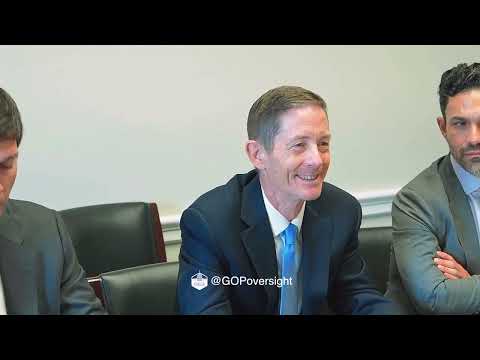
Reed: Biden maintained demanding schedule; senior staff had regular access under standard West Wing practices

House Committee on Oversight and Reform · October 28, 2025

Get AI-powered insights, summaries, and transcripts

Subscribe
AI-Generated Content: All content on this page was generated by AI to highlight key points from the meeting. For complete details and context, we recommend watching the full video. so we can fix them.

Summary

Bruce Reed described President Biden—s daily routine and how the West Wing and residence were used. He said the president routinely reviewed a briefing book, held senior staff meetings and prepared for events, and that staff access to the residence floors was by invitation and not an informal free-for-all.

Bruce Reed told the House Committee on Oversight and Reform that President Biden—s typical workday began early with reading the briefing materials, attending senior staff meetings, and preparing for a full day's events. Reed said the president often worked from the Treaty Room or Oval Office and that the "decision book" for time-sensitive memos arrived each evening.

Reed outlined daily rhythms: an early morning senior staff meeting (times varied), the presidential daily briefing (PDB) in the Oval Office, speech and event prep, afternoon desk time for decisions, and end-of-day map-room meetings for time-sensitive items. He said travel and foreign trips often lengthened the day.

On access to the residence, Reed explained there were customary norms: senior staff and the Secret Service controlled access and staff typically went upstairs only when invited or assigned. He described the Treaty Room as a frequent working location and said he probably met with the president there "three times a week" when the president was in town.

Reed named specific staff who worked closely in the Outer Oval/Outer Office operations during the administration—s travels (Annie Tomasini, Ashley Williams, Stephen Gephardt, Richard Ruffner) and explained the roles of those offices: scheduling, advance operations and event management. Reed said he did not "barge in" on the president and that formal channels were used when someone needed time on the president—s calendar.

Reed also described typical travel routines (senior staff cabin on Air Force One, long trans-Atlantic flights where the president would speak with advisers) and said he had occasional weekend travel to Wilmington or Camp David as the chief-of-staff representative on the road.

Throughout his description, Reed emphasized that the routines he described matched his experience in prior administrations and were not evidence of an effort to conceal the president from the public or from members of Congress.