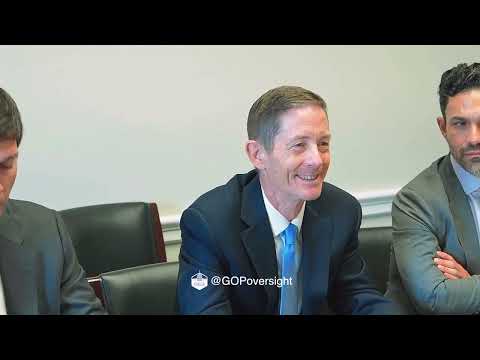
Reed describes commutation standards, says he was not involved in Hunter Biden pardon decision
Loading...
Summary
Bruce Reed told the committee he participated in White House discussions to set criteria for commutations, including using First Step Act pattern/risk scores to identify nonviolent drug offenders with low recidivism risk for commutation. Reed said he was present for some pardon meetings but said he learned of the Hunter Biden pardon only when the
Bruce Reed told the House Committee on Oversight and Reform that he participated in policy discussions near the end of the administration about commutations and pardons and that his principal contribution was crafting criteria for commutations of nonviolent drug sentences.
Reed said the administration—s approach used the First Step Act—s risk assessment ("pattern score") to identify people who had lower risk of recidivism and who had received sentences that would be substantially lower under current sentencing practices. Reed characterized the goal as balancing the president—s desire to correct past sentencing disparities with public-safety concerns.
He said the White House had multiple categorical commutation discussions and that his advice centered on using established risk measures (First Step Act metrics) to limit commutations to low-recidivism individuals. Reed said he was present for discussions about a death-penalty moratorium and commutations and that the president—s decisions reflected policy considerations and the counsel of the White House counsel's office.
When asked about a pardon for Hunter Biden, Reed said he learned of that pardon when the president announced it on a senior-staff call; he said he was not part of a team drafting or advocating for a Hunter Biden pardon and that he had no direct involvement in that specific decision. Reed also said he was present for discussions about several high-profile clemency decisions (including those involving figures such as Dr. Anthony Fauci and Gen. Mark Milley) and that White House counsel led many of the legal discussions.
Reed described his role as providing policy input and said that other offices—notably the White House counsel—managed legal reviews and direct counsel to the president on clemency matters. He emphasized that he did not recall anyone from the president's family asking him to intervene on pardons and that he had no knowledge of family attorneys lobbying him on those subjects.
Reed's description emphasizes use of established statutory frameworks and risk-scoring mechanisms (First Step Act) for commutation decisions and describes limited personal involvement in individual high-profile pardons.