
Andover selects next steps on staffing and funding for community/senior center after hour‑shortage warning
Get AI-powered insights, summaries, and transcripts
Subscribe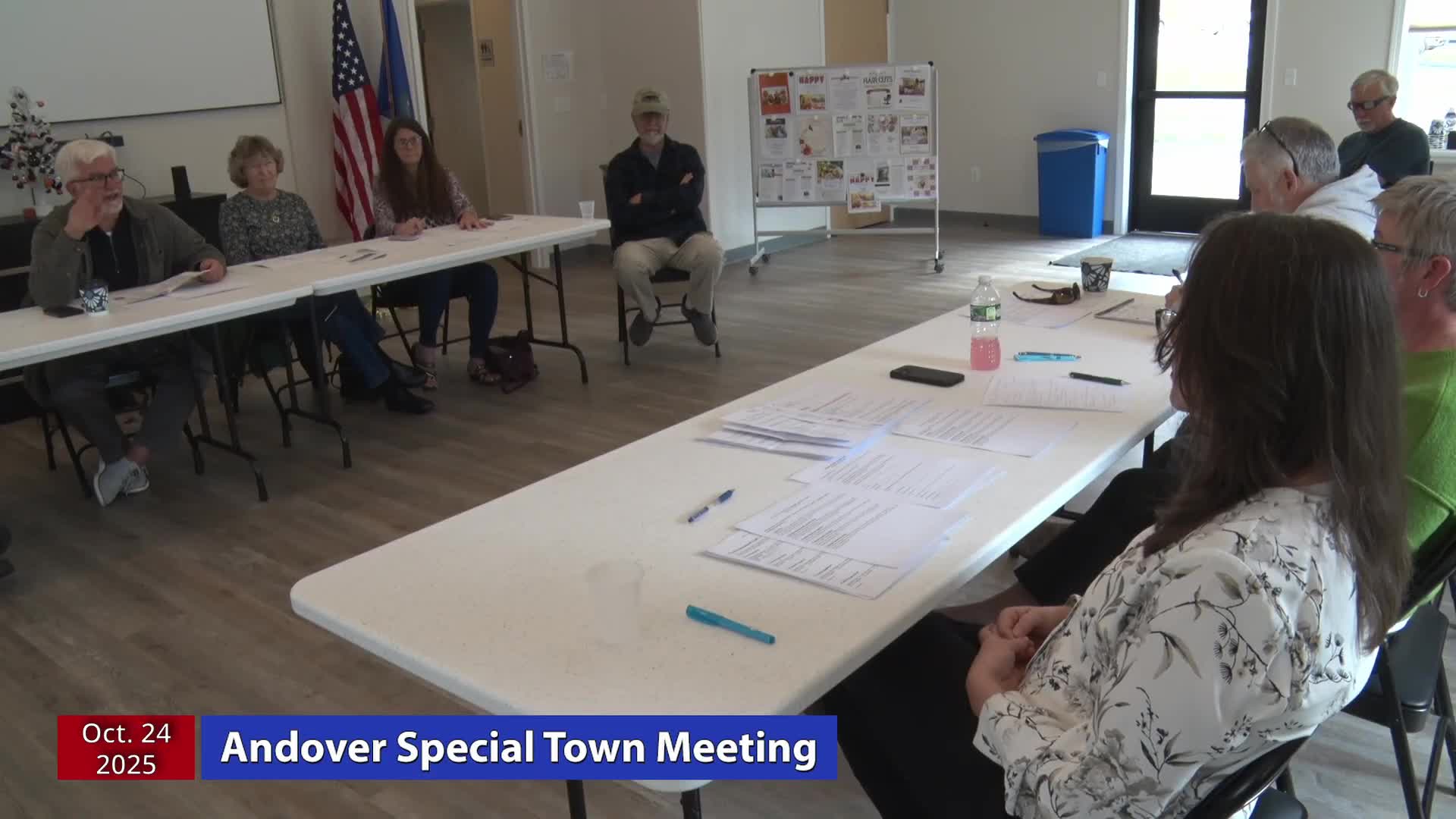
Summary
The Board of Selectmen on Oct. 24 heard public praise and staff requests for additional hours, software and funding for the Andover Community/Senior Center, and asked staff to return with revenue reports and usage‑fee proposals before voting on an hour‑increase for an existing employee.
The Board of Selectmen on Oct. 24 heard hours of public comment and staff reports about the Andover Community/Senior Center’s programs, operations and finances and set a timetable to decide staff hours and funding.
Tess, senior director, told the board the center’s mission is to “connect, grow and serve together regardless of age,” and reviewed a draft senior/community director job description and a 26‑hour contract for that role. She said the building opened about 14 months ago and that staff need a live scheduling system, a color printer and clearer operating procedures to manage growing programs.
Haley, who has served as interim director and teaches multiple classes at the center, described recent program growth — Homework Club, Chess and Checkers, evening art classes and expanded senior offerings — and urged the board to approve a computer system to track attendance and revenue. Haley said some classes are priced to use community registrations to subsidize discounted senior sessions and that program fees are split under the town’s current arrangement: a flat per‑head town fee ($2 for residents, $3 for nonresidents) and the remainder to instructors.
Residents and former staff praised the center’s offerings and warned that programming depends heavily on volunteers. “If we don’t have volunteers, the model programs within this building will be limited,” said Kathy Campan, a former Andover Public Library employee who urged the board to budget staff time, not rely on unpaid overtime.
Eric, the town administrator, briefed the board on potential capital funds and transportation grants. He said a federal Senate request could fund finishing the basement and a propane generator (roughly $300,000) and that a separate legislative appropriation (about $250,000) could be available next July. He also described an ongoing process to reapply for the transportation vehicle grant (the town has used what staff called the PPMPG grant in prior cycles) to replace a 2014 van and a 2017 bus.
Board members pressed staff for accounting and program revenue details. Liz, a Board of Finance member, requested a four‑month revenue summary and clarification about where program and event receipts are held. Staff said receipts are deposited with the treasurer and that the senior account has been split into categories for trips, programs and luncheons so revenue can roll over for those activities.
Transportation and access were central concerns. Linda, who handles senior transportation, said dispatch and scheduling have worked but would be easier with a shared live calendar and software; residents noted that the service is essential even for nearby residents who cannot safely walk to the center.
On programming and pricing, staff said an art instructor’s community class will be priced so proceeds help fund a discounted senior class; other offerings — chair yoga, resistance bands, chair massage and haircut services — use the same split (town per‑head fee plus instructor payment). The board discussed facility rental rates and asked staff to collect peer town fees for comparison.
No personnel action was taken at the meeting, but the chair said the board will schedule a public vote at the next meeting on whether to extend Haley’s hours beyond her current 19‑hour arrangement. The board also asked staff to return with: (1) a four‑month revenue report and current liability balances for lunch, trips and programs; (2) a proposed schedule of facility usage fees and comparisons from nearby towns; and (3) an accounting of pending and potential grant awards tied to the building project and transportation.
Residents and board members emphasized volunteer recruitment while noting capital funds could reduce operating costs (for example, a finished basement and a functioning kitchen could lower meal costs). The meeting closed after the board moved to adjourn; no votes on staffing levels were taken at this session.
The board’s next public meeting will include a vote on the requested staffing change and will review the revenue and account detail requested at this session.