Get Full Government Meeting Transcripts, Videos, & Alerts Forever!
Get email alerts on the Alcohol Sales topic
No spam. Unsubscribe anytime.
Planning commission approves Circle K sale of distilled spirits, keeps municipal limits on window ads and single‑serve containers
Summary
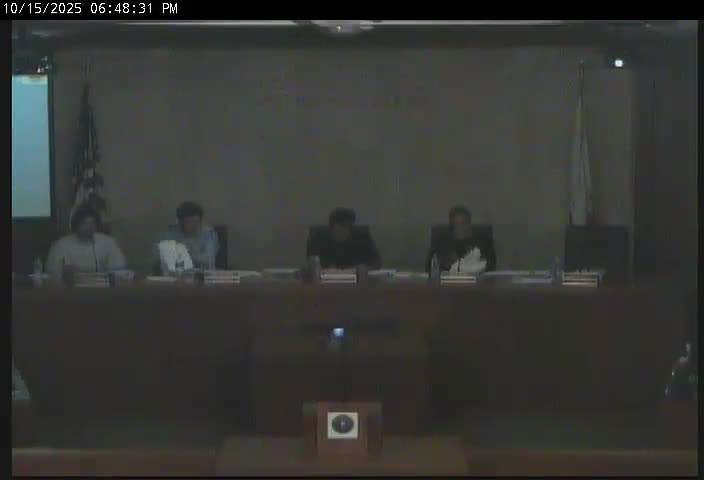
The Huntington Park Planning Commission on Nov. 5 voted unanimously to allow the Circle K convenience store at 2319 Randolph Street to add distilled spirits to its existing beer‑and‑wine license, subject to the conditions in the staff resolution.
The Huntington Park Planning Commission on Nov. 5 voted unanimously to allow the Circle K convenience store at 2319 Randolph Street to add distilled spirits to its existing beer‑and‑wine license, subject to the conditions in the staff resolution.
Staff told the commission the Circle K (PGG Enterprise Corporation) has operated at the location for eight years with a Type 20 (beer and wine) license approved in 2017 and that adding distilled spirits does not change the store footprint. Staff recommended approval under a Class 1 CEQA exemption and proposed conditions including continued use of an ID scanner, replacement of deteriorated no‑loitering and trespass signs, video retention for 30 days, and a six‑month director review followed by annual reporting during the CUP term.
During public comment, attorney Richard Hernandez, representing the store owners, asked the commission to waive or relax several staff conditions and municipal code elements he described as burdensome, including a restriction on alcohol‑related window displays and the city’s minimum off‑sale container size. "I would respectfully request that that item be deleted because I don't think it's a, you know, it's it's it's something that's detrimental to the community," Hernandez said, citing the owners’ long‑standing community support and sponsorship of youth groups.
Paul Boyer, a planning staff member, told commissioners the code exists to preserve the distinction between convenience stores and liquor stores and to protect employee and public safety: "We haven't encountered issues with that," he said regarding past window‑sign policies, and he emphasized that window coverage rules also help emergency responders and employees see into the store.
Commissioners discussed the tradeoffs between allowing more window signage and discouraging the impression that a market is primarily an alcohol retailer. They also considered the municipal code provision governing minimum off‑sale container sizes (the code specifies minimum package sizes for wine, mixed spirits and similar beverages) and staff advice that changes to those standards would require a code amendment by the City Council. The commission declined to relax the code language and left the listed conditions in the resolution unchanged.
The final motion approved PC case 202505 (conditional use permit) as recommended by staff. A roll call recorded votes of "yes" from Commissioner Flores, Commissioner Tapia, Vice Chair Estrada and Chair Tarango. The resolution preserves existing code limits on interior/exterior alcohol advertising that is visible from the street, maintains the minimum package‑size requirement set in city code, requires continued use of an ID scanner, sets a 30‑day minimum for security video retention and gives the community development director authority to conduct a six‑month administrative review followed by annual reviews during the CUP term.
Next steps: the store may add distilled spirits under the approved entitlement and must comply with the conditions in the adopted resolution; any future request to change code limits (for example, window display or container size) would require a formal code amendment through City Council.