Get Full Government Meeting Transcripts, Videos, & Alerts Forever!
Get email alerts on the Cultural Respect Policy topic
No spam. Unsubscribe anytime.
North Kingstown committee reworks cultural‑respect draft after teachers and parents raise concerns
Summary
Committee members and teachers debated a proposed Cultural Respect and Inclusive Engagement policy. Teachers said earlier drafts could chill classroom practice; the committee agreed to add clearer definitions, separate illustrative guidance into an appendix, and follow up with professional development and principal support.
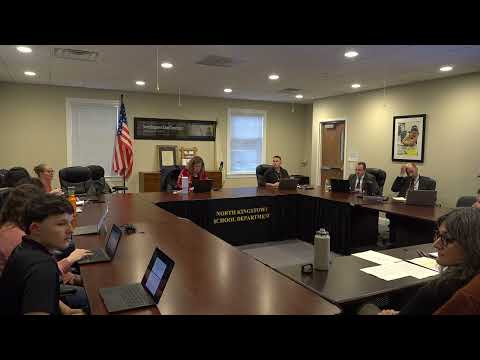
The North Kingstown School Committee paused to discuss a revised Cultural Respect and Inclusive Engagement policy after teachers and community members said an earlier draft read as prescriptive and risked discouraging culturally responsive instruction.
Aaron Earle, chair of the school committee, told the meeting the earlier draft had been pulled last year after teachers and committee members raised concerns that it could limit classroom teaching. "We tabled it… we decided we're gonna go into Uber [sic]. The hope was that there would be some discussions and some PD," Earle said, summarizing the policy's history and the administration's attempt to produce a more positive draft.
Teacher and public commenter Sandra Mikalski urged the committee to encourage teachers to bring the world into the classroom and to "focus less on punishments and more on grace." Mikalski, a seventh‑grade teacher at Davisville Middle School, said she had spent hundreds of hours in international summer institutes and worried a punitive policy would make teachers "not risk it when designing lessons, events, and initiatives that involve cultures outside of our own."
Art teacher Mia Thompson and other classroom teachers said the earlier draft contained language that felt limiting — for example, a suggestion that outside professionals must be hired to teach certain topics. "I love bringing people into my classroom. I don't always have time to do that… sometimes it's a very spontaneous lesson," Thompson said. Several teachers and parents urged the committee to avoid wording that could be read as requiring outside experts for everyday culturally responsive lessons.
Committee members and staff discussed practical implementation questions: which school official should review proposed school‑wide events and displays; who decides whether an activity "mimics stereotype or caricature"; and whether statements that currently appear in the policy are best kept as voluntary guidelines instead of mandatory policy text. Several members recommended placing examples and implementation suggestions in an appendix or guidance document rather than in the policy itself to avoid the appearance of punitive requirements.
Rob Ezinati, the assistant superintendent, said administrators intended the policy to be supportive and to encourage culturally responsive practice across subjects. He proposed adding definitions (for terms such as "primary source," "cultural practices," and "respectful representation") and recommended that building administrators and curriculum leaders be part of a review process for large events. "We don't want teachers to feel like they're handcuffed… we want to encourage teaching about cultures in ways that connect to the curriculum," Ezinati said.
Teachers and committee members also proposed follow‑up actions: clearer definitions in the draft, a separate appendix with guidelines and best practices, principal‑level support to encourage (not restrict) culturally responsive projects, and targeted professional development so teachers and administrators have shared expectations and examples. Laura Bateman volunteered to produce an inventory of policies that have not been reviewed in five years; the committee set a goal to complete a policy‑review plan by August 2026.
What's next: The committee asked administration to redraft the policy to (1) emphasize curricular ties and instructional freedom, (2) add explicit definitions, and (3) move concrete examples and suggested practices into an appendix or guidance document. Members recommended that the administration follow the policy revision with professional development for principals and teachers.
Ending: Committee members said they supported the policy's stated goals but wanted clearer, less prescriptive language to ensure teachers can continue culturally responsive instruction without fear of punitive interpretation.