Get Full Government Meeting Transcripts, Videos, & Alerts Forever!
Get email alerts on the Absentee Ballots topic
No spam. Unsubscribe anytime.
Buncombe County elections board approves 16 absentee ballots, delays public naming practice pending clarification
Summary
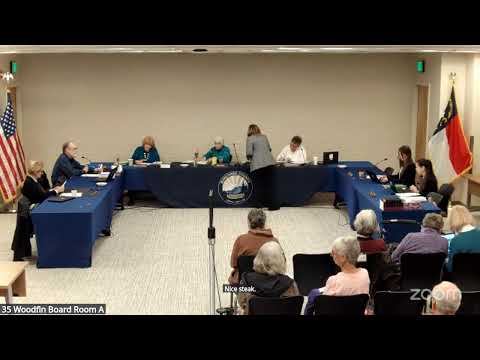
The Buncombe County Board of Elections reviewed and approved 16 absentee ballots on a motion at its meeting today while voting to continue its recent practice of not announcing absentee voter names during review until staff provides written clarification.
The Buncombe County Board of Elections reviewed and approved 16 absentee ballots on a motion at its meeting today while voting to continue the office's current practice of not announcing absentee voter names during review until staff provides written clarification.
Board members examined 15 civilian absentee ballots and one overseas UOCAVA ballot that staff presented for inspection and processing. Election staff said one emailed overseas ballot required duplication because it would not scan; the duplication team reconstructed a preprinted duplicate, certified the duplication process, and the board accepted the duplicated ballot for counting.
The board's action on naming procedures followed an extended discussion about transparency and voter privacy in small precincts. Several members pushed to resume announcing names aloud to help observers track the review; staff said the office's instruction to withhold names was made 'out of an abundance of caution' and that a numbered memo addressing small elections informed the practice. The board voted by voice to continue the recent procedure and to await a written clarification from the director before changing how names are announced.
Staffers walked the board through standard absentee-review steps: confirming the envelope is intact, comparing the voter signature to registration records, checking for proper witness/notary information or an ID exemption form, initialing the top label, verifying the CIV number on the application matches the envelope, and keeping ballots in precinct order for scanning. If a ballot fails to scan, staff said a duplication team is available to make a properly certified paper duplicate for tabulation.
Officials summarized deadlines and cure windows that shape the office's process: the absentee-request deadline already passed (staff said it was Oct. 22 for this cycle), the 'near-relative/disabled' in-person request window runs through Monday, Nov. 3, ballots from military and overseas voters emailed under UOCAVA may be cured through a Friday noon deadline if deficiencies are identified, and mail-returned overseas ballots may be accepted if postmarked and delivered by the day before canvass by 5 p.m., with staff checking the post office box near close of business.
After reviewing the presented materials and the duplicated overseas ballot, a motion to approve the 15 civilian ballots and the duplicated UOCAVA ballot carried by voice vote. Staff sealed the processed ballots in polybags and documented the chain of custody.
The board also confirmed logistical preparations for the election: staff reported that machine deliveries to polling sites and setup of an additional early-voting location at the Weaverville Community Center are underway, and that early-voting turnout for the office was approaching 200. The board scheduled a follow-up meeting for Monday, Nov. 3 at 5:30 p.m. to continue processing absentee ballots and to report any clarifications from the director.
The board did not record a roll-call tally for the voice votes taken on the naming procedure or the absentee approvals; the meeting minutes will reflect the motions and voice outcomes.