
North Ogden hears strong public push to cover North Shore Aquatic Center; council asks for more research
Get AI-powered insights, summaries, and transcripts
Sign Up Free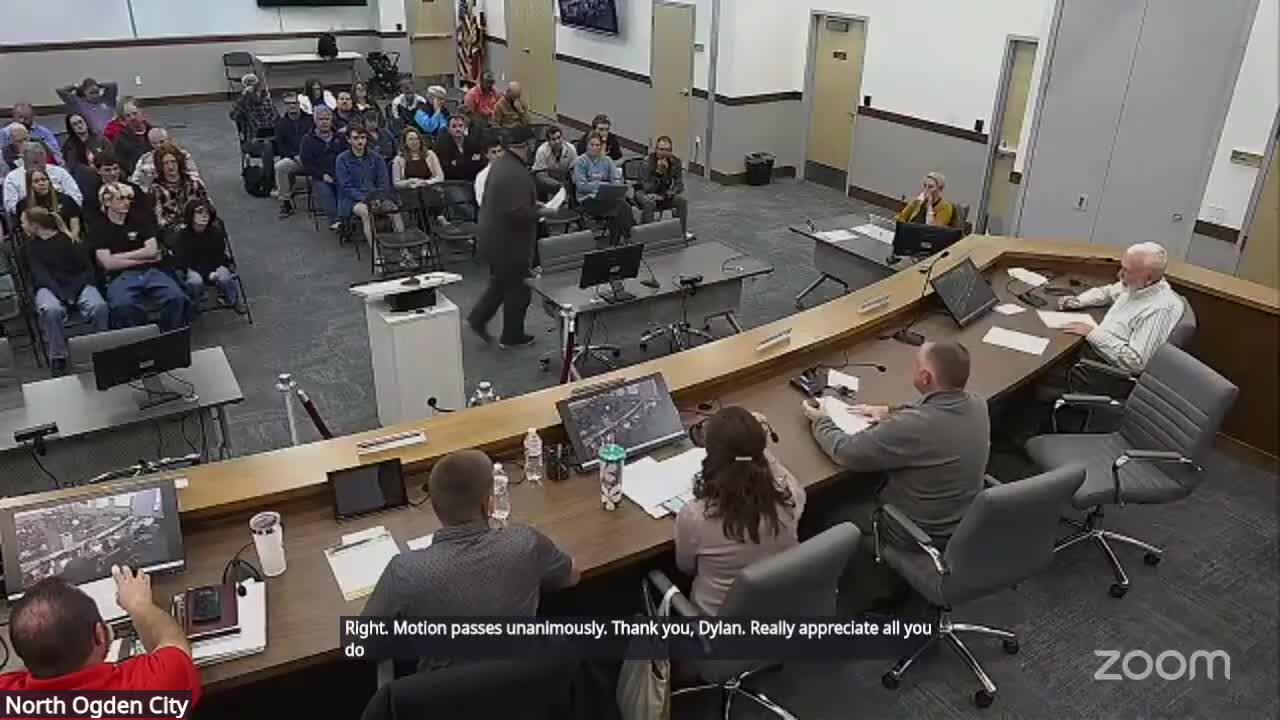
Summary
A wide public turnout urged North Ogden City Council to cover North Shore Aquatics for year-round use. Staff presented rough cost ranges and operating estimates; council asked for more refined cost estimates, potential partner commitments from neighboring jurisdictions, and a citizen-led proposal before pursuing a funding path.
A large group of swimmers, parents and coaches urged the North Ogden City Council on Oct. 28 to cover the North Shore Aquatic Center so the pool can operate year-round. Speakers from local swim clubs, high schools and community groups described long commutes to swim practice, lost participation in local clubs and benefits for youth and seniors from expanded aquatic programming.
City aquatics manager Justin (last name not provided) told the council he would support year-round operation if the council asked him to run it, but warned covering and operating the facility would add new capital and operating costs. Staff presented conceptual options — from temporary inflatable “bubbles” to a permanent air-dome structure — and a wide range of first-year capital estimates. Justin said a permanent air-dome estimate used in staff discussion ranged from roughly $300,000 to $1.6 million for the dome itself and that a broader first-year package of dome, systems and start-up costs could approach $1.8 million. He and staff also noted ongoing operating costs: staffing, heating, chemicals and wintertime maintenance.
The most frequent public comments came from student athletes and coaches. Henderson Byrd, head coach of the Weber High swim team, said the district currently pays external pool rental fees “at minimum $10,000 per team per season,” a cost that local teams and clubs said could be redirected to use a local year-round facility. Several youth speakers described daily pre-dawn commutes to other high-school pools during the season and said a nearby pool would improve safety, participation and retention.
Opponents at the meeting urged caution. Resident Brenda Ashdown said she opposed covering the pool and warned that the city would likely shoulder increased property taxes for capital and long-term maintenance. “I will be known as the old lady that does not support covering the swimming pool,” she said, adding concerns about ongoing operating deficits and the historic votes the community took on similar proposals.
Council members and staff focused their questions on two issues: (1) how much of the capital and operating cost could be secured from outside partners (Weber School District, neighboring municipalities, private donors or grants), and (2) accurate operating projections under several usage scenarios. Staff said they had not included potential rental income from school teams, private clubs or water polo in their rough estimates and asked for written commitments or more detailed interest from those potential partners to refine revenue assumptions.
No formal action was taken. Council members directed staff to seek more detailed cost proposals, pursue possible grant opportunities and interlocal commitments, and to work with interested residents on a focused, citizen‑led proposal with concrete partner commitments and fundraising plans before the council considers a financing approach.
The pool discussion drew large public turnout and a wide range of viewpoints; council members repeatedly asked residents who advocated for year-round coverage to secure clearer commitments from other jurisdictions and local organizations to share capital or operating responsibilities. Council members also asked staff to return with clearer cost breakdowns (capital vs. ongoing), staffing plans and likely daily usage thresholds required to cover incremental operating costs.