Newark council reviews proposed amendments to 2024——2026 capital improvement plan
Loading...
Summary
City staff presented a workshop to solicit council feedback on proposed amendments to the 2024——2026 Capital Improvement Plan, outlining immediate, high-priority projects to reinstate and a proposal to transition to a five-year CIP for longer-term planning, with planning-commission review and final council adoption expected later this year.
Newark City Council on Oct. 31 held a special workshop to review proposed amendments to the city—s 2024——2026 Capital Improvement Plan and to solicit council feedback on reinstating deferred projects and adding several new, high-priority items.
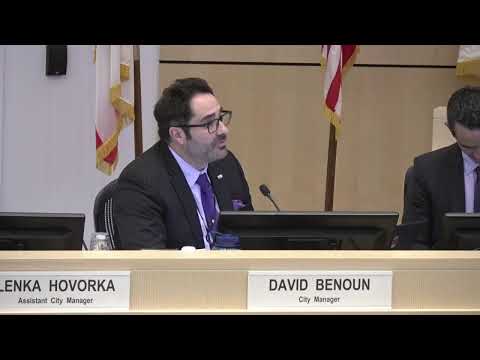
City Manager Banoon opened the meeting and said staff will incorporate council feedback into a draft amendment to be sent to the Planning Commission for conformance with the city—s general plan before returning to the council for formal adoption in November or December.
City Engineer Mickey Sabota briefed the council on the CIP process, describing the document as a long-range planning and budgeting tool that identifies, prioritizes and funds major public infrastructure and facility projects. Sabota said Newark—s current CIP is approved on a two-year cycle alongside the budget but recommended development of a five-year CIP to provide more realistic delivery forecasting, improve grant readiness and increase long-term transparency.
Staff summarized why some projects were deferred after the June 2024 budget adoption: two council absences and several recusals left staff without a quorum for certain items, and the city was completing a parks master-plan update and the city—s first facilities master plan. Those master plans, approved later in 2024, produced prioritized project lists that staff now proposes to fold back into the current CIP where feasible this fiscal year.
Funding sources discussed included restricted funds such as gas tax and development impact fees and unrestricted capital funds. Sabota estimated gas-tax and related street funds at roughly $4 million to $4.5 million annually and described park impact fees as variable with a recent multi-year range from several hundred thousand to several million dollars. Staff said park impact fees have an approximate balance of $10 million, with about $6 million available after other commitments. Staff also noted Measure G excess revenues as a proposed funding source for facility work and acknowledged a late-notified potential contribution from State Senator Aisha Wahab to help pay for priority items.
The next steps outlined by staff: incorporate council feedback, send the CIP amendment to the Planning Commission for general-plan conformance per state law, and return to council for final adoption in November or December. Sabota also said staff will begin the formal process to develop the city—s first five-year CIP next spring with an introductory council presentation and a draft for prioritization in the spring of 2026, aiming for a July 1, 2026 effective date if approved.
The workshop was discussion-focused; no formal votes were taken.