Get Full Government Meeting Transcripts, Videos, & Alerts Forever!
Get email alerts on the Language Access topic
No spam. Unsubscribe anytime.
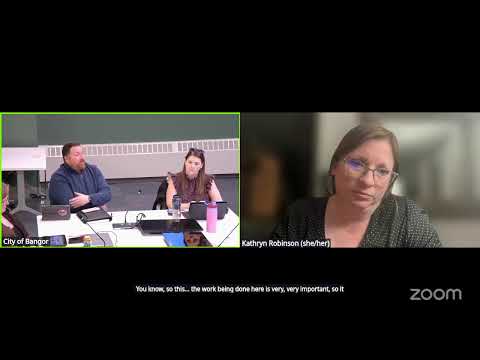
Bangor committee pushes for language-access plan; invites multicultural center and others to advise
Summary
The committee discussed creating a city language-access page and agreed to invite local stakeholder groups to its November meeting to clarify needs and feasible next steps before recommending a permanent agenda link or broader translation service.
The Advisory Committee on Racial Equity, Inclusion and Human Rights discussed language access and translation needs Oct. 28, advancing a plan to gather stakeholder input before recommending a citywide agenda link or translation service.
Chair Katie Bridal reviewed prior work and said the committee wanted to avoid placing a long list of translated text on printed agendas. Staff reported the Maine Multicultural Center identified Spanish, Arabic and Haitian Creole as the most commonly spoken non-English languages in the Bangor area.
Jamie Beck, a resident who addressed the committee, noted that viewers can use YouTube—s language options for recorded meetings and suggested the city focus on clear, accessible web resources: "If you need translation services, it was more of translating making sure that our website is able to be translated into multiple languages as needed," she said.
Members discussed practical approaches: putting a short translated blurb (four words) at the top of agendas with a clickable link or QR code to a dedicated language-access page, asking the Maine Multicultural Center for volunteer or vetted translators, and exploring machine transcription services as a low-cost first step (one member cited a pay-as-you-go transcription example of about $1 per recorded minute).
Committee members agreed not to vote that night on a recommendation to add a translated link to all city agendas. Instead they asked staff to invite representatives from the Maine Multicultural Center, University of Maine language programs, the state office for new Mainers, Catholic Charities (Portland area resource), and local health-care organizations to the committee—s November meeting to identify priority services, typical user needs, and potential local partners. The committee also discussed whether a formal language-access plan documented across departments would be an appropriate long-term goal.
Members noted limits to real-time translation: Zoom-generated captions are available live but machine translations added by YouTube can take hours to process for posted videos. The committee emphasized that the first practical steps should focus on clear signposting for language assistance, then expand to additional services as resources and vetted translators become available.