Get Full Government Meeting Transcripts, Videos, & Alerts Forever!
Get email alerts on the 287g Resolve topic
No spam. Unsubscribe anytime.
Bangor committee seeks written procedure after council declines resolve on 287(g) partnerships
Summary
After the City Council did not adopt a resolve the committee had proposed outlining how the city would handle any request to enter a 287(g) immigration-enforcement agreement, the advisory committee decided to ask staff to work with the city manager to formalize the existing internal steps in writing and report back.
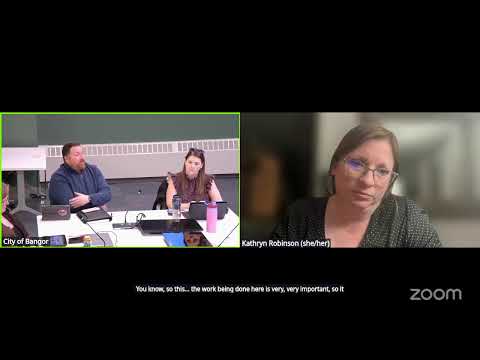
The Advisory Committee on Racial Equity, Inclusion and Human Rights discussed next steps Oct. 28 after the City Council declined to adopt a committee-drafted resolve detailing how the city would respond if asked to enter a 287(g)-style agreement with federal immigration authorities.
Chair Katie Bridal said the committee—s intent was transparency about the steps the city would follow; she told members that "the resolve did not pass," and the council—s feedback focused on the document—s form and legal effect rather than its substantive content.
Committee members and city staff framed the disagreement as procedural. Courtney, a city staff member, told the committee that a formal city policy would be a different mechanism from a resolve and that the city solicitor had warned a binding policy could in effect bind future councils. "If the committee was interested in putting forth a policy for consideration, that policy would go to gov ops," Courtney said, describing an administrative path that can include solicitor review and amendments before any council action.
Councilor Beck, who attended the committee meeting, praised the committee—s work even though the resolve failed, saying, "This committee did exactly what it was designed to do." He noted there had been a thorough council conversation and said memorializing staff procedures could reassure the public.
The committee agreed on a next step that avoids asking council to adopt a binding policy immediately. Members asked Courtney to meet with the city manager to explore whether the manager could put the department-level workflow in writing—a formal, nonbinding operating procedure that would describe the steps staff would follow if the Bangor Police Department or another municipal entity received a request to enter a 287(g)-style agreement. The committee asked staff to report back with the city manager—s position at the next meeting.
Courtney told members that such a written internal procedure would not itself bind future councils but could provide clarity for staff, new department heads and members of the public about how the city would process any request. Members discussed how written steps could include notification to the city manager, review by legal counsel, discussion in the government operations committee and referral back to the advisory committee for input.
The committee also noted recent state developments: Wells, Maine, had recently ended its own 287(g)-style agreement, and at the time of the meeting there were no Maine municipalities with active agreements. Members said that a clear written procedure, even if nonbinding, would address residents— fears and decrease the need for repeated clarifying inquiries.