Broomfield adopts 2026 budget, clears bond packages and enterprise rate changes
Loading...
Summary
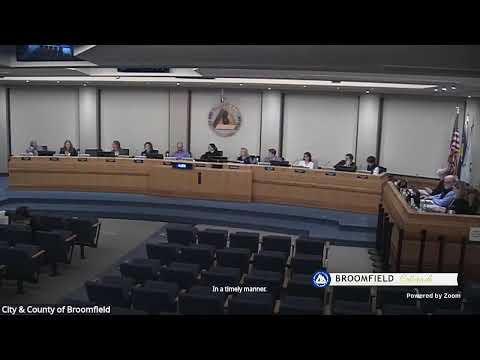
BROOMFIELD — The City and County of Broomfield adopted its fiscal 2026 budget and authorized bond financing Monday, voting to advance a multiyear plan for utilities and public safety while maintaining a 20% fund reserve.
BROOMFIELD — The City and County of Broomfield adopted its fiscal 2026 budget and authorized bond financing Monday, voting to advance a multiyear plan for utilities and public safety while maintaining a 20% fund reserve.
Finance Director Graham Clark told the council the budget process was “monumental,” reflecting constrained local revenues and rising costs: “This effort was monumental, and the departments came back and answered the challenge.” He said property and sales tax growth will be flat in the near term and that council and staff prioritized public safety, public works and water utilities in the face of limited flexibility.
Why this matters: the budget vote and related bond approvals lock in financing for two large utility projects and the long‑anticipated police and courts facility, while also implementing the second year of a five‑year enterprise rate plan designed to make the water and sewer funds stand on their own.
What council approved
- Resolution 2025‑142 adopting the 2026 budget and appropriating sums for the city and county (passed 9–0), and Resolution 2025‑141 authorizing a second amendment to the 2025 budget (passed 9–0).
- Ordinance 2286 (enterprise rate ordinance) amending Title 13 to implement the second year of the five‑year plan. Staff projected the year‑over‑year increase for an average single‑family home at about $16.89 and noted nonresidential rates also rise 15%. The ordinance passed on second reading, 6–3.
- Bond ordinances to finance capital projects: Ordinance 2288 (water revenue bonds), Ordinance 2289 (sewer revenue and refunding bonds) and Ordinance 2290 (police and courts financing). Council passed all three bond ordinances unanimously, 9–0.
Officials and next steps
City Manager Hoffman and the finance team emphasized the plan is conservative and focused on sustaining core services while addressing deferred maintenance and major bonded projects. Clark said the city plans to issue the bonds in late January or early February and that the presentation updated the bond amounts to the “not to exceed” figures; actual bond proceeds are expected to be lower and aligned with the budgeted amounts.
In explaining the enterprise rate adjustments, Clark repeated staff’s rationale that the increases follow a model developed with outside consultants and audited revenues, and are intended to reduce reliance on growth funding for infrastructure. He also introduced an online bill estimator for residents to preview changes and said the ordinances are required for the bond issuances to proceed.
Votes at a glance
- 2025 second budget amendment (Res. 2025‑141): passed 9–0. - 2026 budget adoption (Res. 2025‑142): passed 9–0. - Ordinance 2286 (enterprise rates): passed 6–3 (second reading). - Ordinance 2288 (water revenue bonds): passed 9–0. - Ordinance 2289 (sewer revenue & refunding bonds): passed 9–0. - Ordinance 2290 (police & courts financing): passed 9–0.
Council context and fiscal outlook
Clark and City Manager Hoffman told the council the city’s primary revenue streams — property tax and sales tax — are expected to remain flat when adjusted for inflation over the next couple of years, reinforcing the need for conservative assumptions. The budget preserves a 20% fund reserve and keeps new personnel additions minimal, with most proposed staffing additions centered in water utilities.
Public comment and community impact
During budget questions, councilors raised the near‑term effects of the federal SNAP pause; staff said the city cannot load funds onto SNAP EBT cards and explained it is working with nonprofit partners to increase capacity. Hoffman said the city would distribute a small near‑term allocation to local food providers while conversations continued about possible further assistance.
What remains to watch
Bond issuance timing and final contract amounts for the police facility and utility projects; implementation of the enterprise rate increases and the new online bill estimator; and how the city manages 2027 budget pressures if revenue growth remains constrained.
Ending note
Council members thanked staff for a year‑long budget process and staff noted they will provide quarterly updates on any transactions and continue to monitor assumptions leading into 2027.