Get Full Government Meeting Transcripts, Videos, & Alerts Forever!
Get email alerts on the Referendum topic
No spam. Unsubscribe anytime.
New Prague board hears final referendum pitch; superintendent outlines $2 million, 10-year plan and possible program cuts
Summary
The New Prague Area Schools board heard a detailed presentation Oct. 13 about a single-question, 10-year referendum that would raise about $2 million annually with an inflation adjustment; the superintendent said the request is intended to preserve class-size averages, transportation services and elective programming if state funding and enrollment trends remain unfavorable.
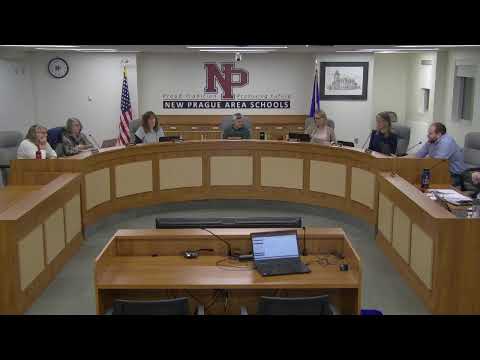
The New Prague Area Schools board spent the largest portion of its Oct. 13 meeting on the district—s proposed single-question referendum, a 10-year request that would raise about $2 million per year and includes an inflation factor to help sustain spending over time.
Superintendent Andy (identified in the meeting as the district superintendent) said the plan would generate the equivalent of roughly $510 per pupil over the life of the measure and estimated a tax impact of about $20 per month for a home valued at $400,000. The proposal is intended to help maintain current class-size averages, transportation services and programming the district now provides, the superintendent said, and to reduce the likelihood the district will need to seek additional levies more often.
Board members pressed for specific consequences if voters reject the referendum. The superintendent said the district would likely need to consider reductions that could affect class sizes, length of bus routes and the existing seven-period school day at the middle and high school. He explained that moving from a seven- to a six-period day would reduce the number of course opportunities for students (from 56 opportunities for a student over four years to 48 under a six-period model), which would in turn affect electives, exploratories and arts offerings. He said the district had already implemented cost-containment steps earlier in the year, including reductions in elementary staffing tied to enrollment declines.
Board members asked how a change in the master schedule would affect study halls, credit recovery and students who struggle academically. The superintendent said those areas would likely be affected but that the district would need further study to identify specific scheduling models and mitigation strategies. Members also asked about fund balance and the district—s goals for reserves; the superintendent said administration will bring additional fund-balance scenarios and options to a November meeting.
The superintendent and board noted that neighboring districts had recently sought voter approval of levies and referendums and that, by comparison, the proposed New Prague levy would keep the district near or below the midrange of local tax increases reported for similar districts. He also noted that the district—s administrative costs and the share of spending in classrooms are below local and statewide averages.
The presentation closed with reminders about one week of early voting remaining and extended hours for in-person ballots. No formal vote on the referendum occurred at the meeting; the board—s role at the session was informational and to answer questions from members and the public.