Get Full Government Meeting Transcripts, Videos, & Alerts Forever!
Get email alerts on the Child Welfare topic
No spam. Unsubscribe anytime.
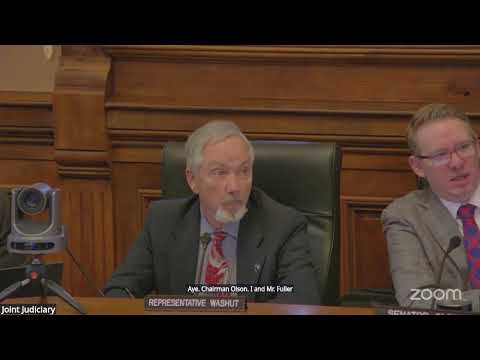
Judiciary committee rejects DFS confidentiality bill after privacy, scope debate
Summary
The Joint Judiciary Committee on Oct. 13 declined to advance 26LSO0075, a draft bill that would have loosened some Department of Family Services confidentiality limits to permit referrals, interagency data linking and program evaluation.
The Joint Judiciary Committee debated proposed revisions to Department of Family Services confidentiality statutes in bill draft 26LSO0075 at its Oct. 13 meeting. The draft was intended to clarify how DFS can share confidential child‑welfare and juvenile‑justice data for program evaluation, interagency services and referrals.
DFS Director Corinne Schmidt told the committee the bill grew from operational problems connecting juvenile justice information and DFS case management (WyoSafe). She said the department seeks authorization to link data for program evaluation and to analyze whether interventions work: “we don’t know what’s working or where those opportunities for early intervention may be” because datasets are siloed. Schmidt said the department could live without the referrals provision for the moment and offered to return with focused statutory language after more interim study.
During public comment, Laramie County resident Patricia McCoy urged the committee to narrow access, require consent or notice, and require a privacy impact assessment. McCoy warned of re‑identification risks in small communities and said, “the broad language regarding who may access these records and for what purposes raises several red flags to me.”
Committee members amended the draft to raise a proposed misdemeanor fine from $500 to $1,000 (a conforming title change was made), but on roll call the committee did not advance the bill. The recorded roll call showed a split among members: a majority of the house members on the joint committee voted no, and the motion to advance the bill failed. Director Schmidt had urged the committee that the provisions for service connections and longitudinal evaluation were the department’s priority and that referrals language could be reworked in future interim work.
Ending: The committee did not advance 26LSO0075. Legislators and DFS staff offered to continue interim discussion about narrow referral language and data‑linking authority, and DFS said it will work to better explain operational needs and privacy protections if the topic returns.