Get Full Government Meeting Transcripts, Videos, & Alerts Forever!
Get email alerts on the Five Year Forecast topic
No spam. Unsubscribe anytime.
Five‑year forecast shows structural gap; board asks for revised FY26 budget and offers early budget guardrails
Summary
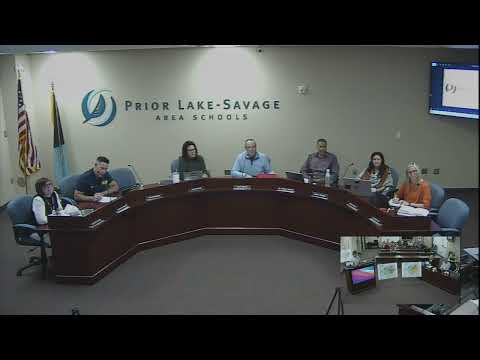
Director Bridal presented a five‑year forecast at the Oct. 27 study session showing projected revenue growth insufficient to match rising expenditures and warning that the district would face statutory operating debt (SOD) by FY2028 absent action. The board asked for more detailed line‑item explanations and instructed administration to develop
At the Oct. 27 study session Director Bridal presented the district’s five‑year financial forecast and reviewed assumptions built into the model. The presentation noted an assumed 2% increase in the general education formula, a projected 6% annual increase in transportation costs, and the district’s current voter‑approved operating referendum at $623.97 per student with no inflationary factor applied.
Director Bridal warned that under the forecast assumptions the district would exhaust available reserves and face statutory operating debt (SOD) by fiscal year 2028 if no corrective action is taken. "If we do nothing, clearly you clearly you can see that we would have an issue in fiscal year 28 where we would be an SOD," Bridal said, summarizing the forecast projections. Staff said they would return a revised FY2026 budget (reflecting audited FY2025 adjustments) and then refine FY2027 assumptions once the board provided policy direction.
Board reaction and follow‑up requests: Directors pressed administration for an item‑by‑item breakdown of what changed since the May forecast, citing roughly $4.6 million in increased expenditures compared with earlier projections. Administrators said some increases reflect FY2025 audit results (notably transportation and insurance) and that some forecast assumptions differ from prior modeling methods (for example, compounding versus flat percentage assumptions). Directors asked for: a revised FY2026 budget to be presented at the Nov. 24 meeting; a side‑by‑side comparison of May versus current forecasts; and granular account‑level detail to explain year‑over‑year changes.
Emerging budget priorities and guardrails: During discussion directors coalesced around a small set of early priorities to guide staff work: protecting current class‑size targets where practicable, prioritizing transportation efficiencies (including a forthcoming RFP and policy review of eligibility distances), and preserving differentiated advanced‑learning supports (as staff redesign gifted/talented services) rather than returning to the previous pull‑out model. Administration agreed to analyze the financial effects of those guardrails and return options to the board.
Why it matters: Staff said roughly 83% of district spending is salaries and benefits, limiting the pace at which the district can reduce recurring costs without affecting programs and personnel. The forecast is intended to give the board a baseline so it can direct policy priorities and identify where reductions will be least harmful to strategic goals.
Next steps: Administration will bring the audited FY2025 results, a revised FY2026 budget for Nov. 24, and additional analysis of transportation, staffing scenarios tied to proposed boundary changes, and fund‑balance sensitivity scenarios for board review.