Dysart board hears two elementary spotlights on PLCs, data-driven instruction
Summary
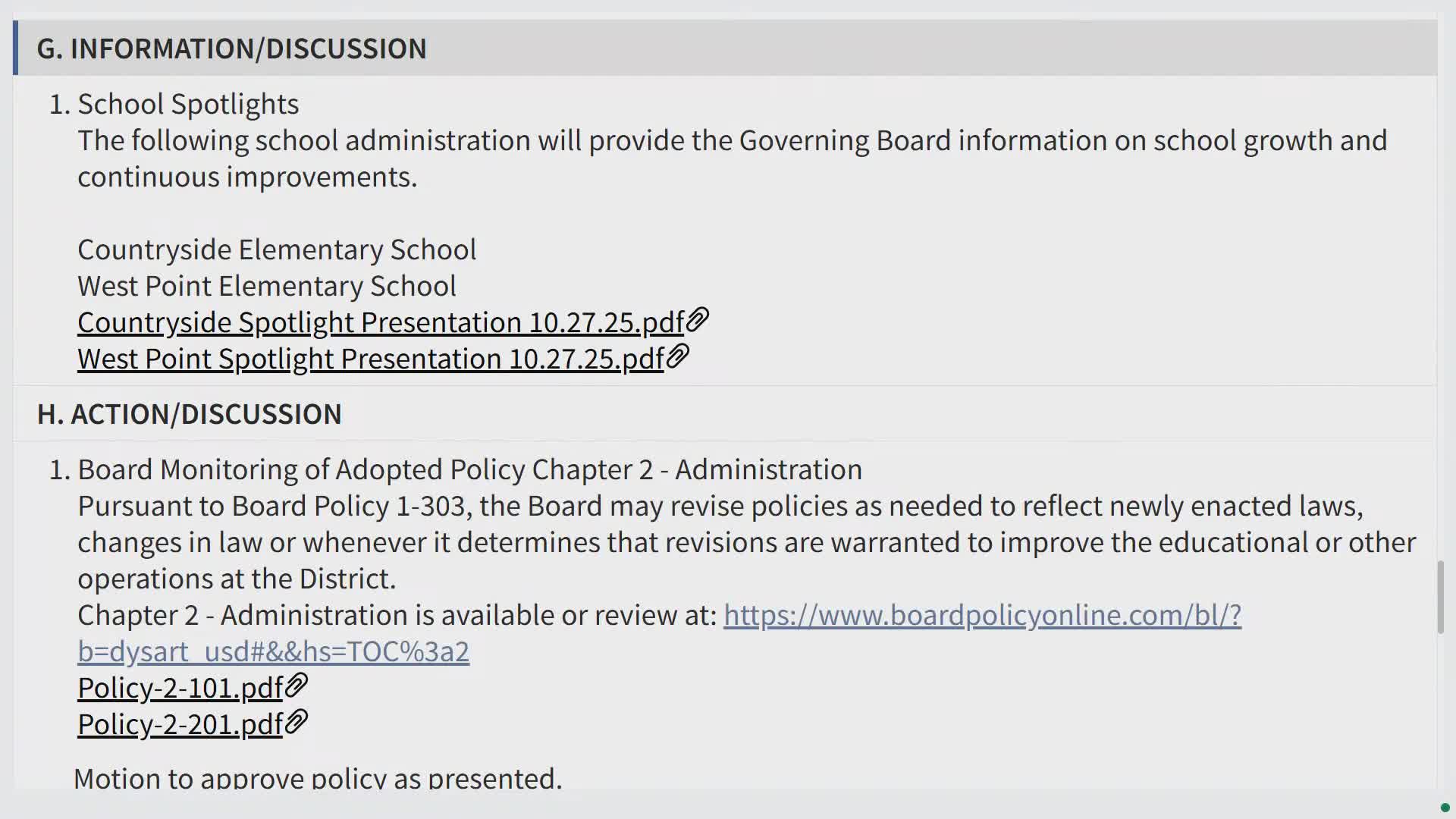
The Dysart Unified School District governing board on Oct. 22 heard presentations from two elementary campuses on efforts to raise student achievement through professional learning communities and frequent formative assessment.
The Dysart Unified School District governing board on Oct. 22 heard presentations from two elementary campuses on efforts to raise student achievement through professional learning communities and frequent formative assessment.
Countryside Elementary principal Chantelle McNeese told the board her staff used backwards design, common formative assessments and frequent two‑week data cycles to guide instruction. She said a cohort in math "grew from 29% all the way to 53%, a whopping 24% growth in proficiency," and that ELA proficiency in that cohort rose "33% to 48, 15% growth in proficiency." McNeese said teachers break standards into smaller skills, provide multiple representations of concepts and plan practice across days so students can master complex standards.
Kylie Sullivan, a Countryside teacher, described the school's emphasis on strong Tier‑1 whole‑group lessons to reduce the number of students needing Tier‑2 intervention. "If you start with really intentional first lessons and first exposures to a skill, then we don't have as many kids going to tier 2," she said, describing practices that anticipate common misconceptions and prevent students from falling behind.
West Point Elementary principal Amy Michos and the kindergarten team described parallel work focused on early literacy and Acadience screening. The team said its beginning‑of‑year Acadience data showed 24% of kindergarten students were at or above benchmark and that the school uses common formative assessments to create fluid intervention groups. Leslie Espinosa and Sean Murray said the team meets in weekly professional learning team meetings to answer four guiding questions: what should students learn, how will the team know they learned it, what will the team do if they do not learn it, and what will the team do if they already know it.
Presenters from both schools said their approaches combine collaborative planning, frequent reassessment, and tiered supports. Board members questioned whether the instruction was "teaching to the test." McNeese responded that the team begins with the standards and is "quite critical of the test," adding that teachers sometimes find district items that do not align to Arizona standards and adjust instruction accordingly.
The presentations concluded with board members praising the teams and noting that state cut scores had been adopted the same as last year, which will allow campuses to see official school labels once the State Board publishes them.