Public commenters at Seattle council meeting raise ALPR, immigration enforcement and food-access concerns
Loading...
Summary
During the Oct. 28 public comment period, residents urged the council to act on automatic license plate reader (ALPR) data access during reported federal staging in SoDo, urged more accountability for organizations receiving city funds, and called for permanent local grocery markets. One speaker was warned for disruptive, abusive remarks.
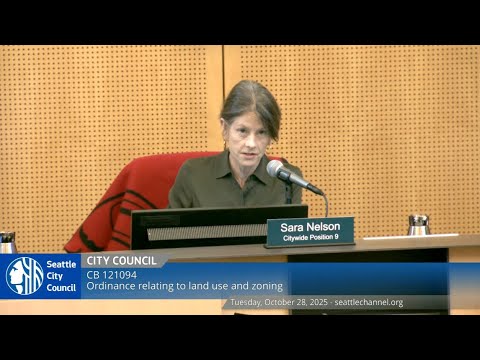
Public comment at the Oct. 28 Seattle City Council meeting covered several recurring themes: concerns about federal immigration enforcement and the possible use of automated license plate reader (ALPR) data; allegations about misuse of homelessness funding; calls for greater accountability for recipients of city grants; and proposals to increase local food access.
Paul Gloomis, identifying himself as a King County Republican Party state committeeman, alleged widespread corruption tied to homelessness funding and said a "reckoning" is coming. The council did not act on those claims; they were offered during public comment and presented as the speaker's view.
Joan Foch told the council she had received reports and photographs she said showed U.S. Customs and Border Protection and other federal agencies staging in SoDo in advance of a surge and that the activity was affecting neighboring cities. Foch asked the council to "consider disabling the ALPRS system temporarily during this surge so that we can protect our neighbors and ensure that this data does not get misused by the federal government."
Crow Delavan cited a University of Washington study about the use of certain camera systems and warned that immigration authorities have accessed similar data in other jurisdictions. Delavan urged the council to consider steps that would reduce the risk that ALPR or related camera data could be used for immigration enforcement.
Other commenters focused on food access and local distribution. Yvette, representing the Colored Girls Garden Club, described the group's twice-weekly food distributions in Rainier Beach and asked for stronger reporting and quarterly accountability from organizations that receive city funding. Remote speaker David Haines proposed establishing permanent farmers' markets and distribution co-ops to increase access to healthy foods and suggested using near-expiration food for food banks.
The meeting also included a disruptive speaker, Alex Zimmerman, who used abusive and anti-Semitic language; the council president noted a formal warning under council rules and recorded that the speaker had been placed on notice.
Remarks during public comment do not by themselves constitute council action. Council members acknowledged the issues raised and several said staff would follow up on particular concerns (for example, the reported staging in SoDo and food-access needs), but no formal policy change was enacted during the Oct. 28 meeting.