Get Full Government Meeting Transcripts, Videos, & Alerts Forever!
Get email alerts on the Streets And Transportation topic
No spam. Unsubscribe anytime.
Chelsea outlines MassDOT‑funded Reimagining Broadway surface work, targets late‑2026 bid
Summary
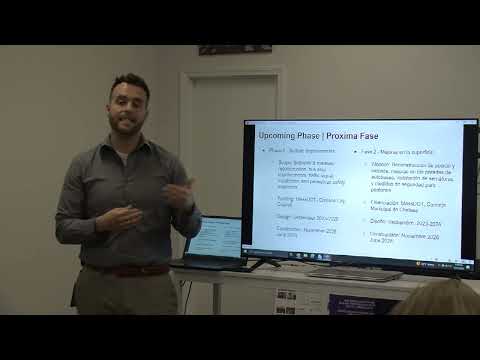
City of Chelsea officials on Thursday outlined the MassDOT‑funded Reimagining Broadway surface‑improvement phase, saying the work will replace sidewalks, mill and repave roadway surfaces, reinstate bus and bike lanes, add lighting and landscaping and reconfigure several intersections to improve safety and multimodal access.
City of Chelsea officials on Thursday outlined the MassDOT‑funded Reimagining Broadway surface‑improvement phase, saying the work will replace sidewalks, mill and repave roadway surfaces, reinstate bus and bike lanes, add lighting and landscaping and reconfigure several intersections to improve safety and multimodal access.
"This is a MassDOT‑funded project. That means the timeline and schedule are heavily beholden to MassDOT and their design review process," said Ben Cares, director of housing and community development. Cares said the utility reconstruction phase is nearing completion and that the city is "targeting an advertisement date of November 2026. Right now what I've heard is actually 11/30/2026. So really, like, 12/01/2026." He said the surface work is expected to take about two years once construction begins.
The presentation covered work limits from City Hall Avenue — the street around City Hall — down Broadway to William Street, including Chelsea Square, Williams Street and Bellingham Square. City staff said the project will eliminate a slip lane around City Hall, expand the City Hall plaza and convert the one‑way stretch in front of City Hall to two‑way traffic to reduce circuitous routing and improve corridor efficiency.
Cares described surface improvements that include curb extensions to shorten crosswalks, new and resynchronized traffic signals at some intersections, rectangular rapid‑flashing beacons at key crossings, upgraded bus stops (including raised platforms in some locations to improve boarding for riders using mobility devices) and expanded tree‑planting and plaza areas to increase shade and reduce the urban heat island effect.
The reinstatement of a dedicated bus and bike lane along Downtown Broadway was noted as a prior City Council action; Cares said that configuration will return as a permanent installation. He also said the project team is coordinating with the MBTA and MassDOT on bus stop locations and design details.
City staff framed the project as a safety and access initiative: "This is by and large a safety improvement," Cares said, noting the corridor includes multiple crash clusters involving vehicles, pedestrians and bicyclists. He linked the effort to a recent federally supported Vision Zero planning process intended to reduce severe crashes.
Attendees raised questions about maintenance of new streetscape elements, parking impacts, bus‑stop relocation, outreach to schools and construction timing. A business representative asked specifically about tree beds and litter; Cares said maintenance will be a combination of DPW operations, the city’s beautification committee and coordinated community cleanup events and that staff hope the project will encourage better upkeep once improvements are completed.
On parking, Cares said he did not have exact block‑by‑block counts available at the meeting. He recalled that some blocks lost three to four spaces after earlier curb extensions but said, "I believe it is a net neutral loss" across the whole corridor; he cautioned that the exact number was not available and should not be quoted as a precise figure.
Residents asked whether a bus stop across from City Hall would be moved; staff said the stop is currently slated to remain and that the housing and community development team would confirm MBTA plans and follow up by email. For safety concerns tied to the Tobin Bridge off‑ramp at Fourth Street, Cares said that ramp is MassDOT infrastructure and agreed to pass signage and safety requests to DOT engineers.
Construction management details: staff said sidewalk work will typically be done in advance of milling and paving, temporary ramps will be provided to maintain business access, and a resident engineer or on‑site liaison will coordinate with property owners and businesses. The city said it will collect contact information via a sign‑in sheet and expects to use an email (construction@chelseama.gov) and a 311 or city phone line for inquiries; a dedicated contractor phone number will be provided when bids are awarded and a contractor schedule is available.
Cares said design is expected to wrap up in 2026 and that once the contract is awarded the city will hold a construction kickoff meeting with a more granular schedule from the contractor. He encouraged residents to review the presentation materials on the city website and to submit questions and feedback.
Next steps include final MassDOT design review, property‑owner coordination where sidewalk frontage must be adjusted, the Nov. 2026 advertisement for bids (tentatively 11/30/2026–12/01/2026) and a public construction kickoff after a contractor is selected.