Get Full Government Meeting Transcripts, Videos, & Alerts Forever!
Get email alerts on the Urban Forestry topic
No spam. Unsubscribe anytime.
Urban Forestry report: Kirkwood lost about one‑sixth of street trees in 8 years; commission urges more plantings and code changes
Summary
Shane Slaton, chair of the Urban Forestry Commission, told the council the city’s 2024 street‑tree inventory counted 8,328 public trees — a net decline of 1,654 trees over the prior eight‑year inventory, which the commission described as roughly one‑sixth of the urban canopy lost.
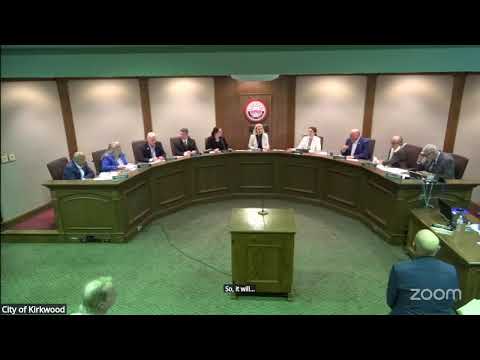
Shane Slaton, chair of Kirkwood’s Urban Forestry Commission, told the council the commission compiled an annual summary and began drafting a commission manual to guide commissioners and staff. Slaton reported that the 2024 street‑tree inventory counted 8,328 public trees, a decline of 1,654 trees compared with the prior eight‑year inventory — "in only 8 years, we lost one sixth of our city's street trees," he said.
The commission reported 186 street trees removed and 64 trees planted in the calendar year described in the report, leaving 2,819 vacant planting sites the commission identified as suitable for medium and large trees. The commission attributed roughly one‑quarter of the loss to emerald ash borer, about 10% to city redevelopment and capital projects, and the remainder largely to mature trees in poor condition. The commission said recent plantings are more diverse and thus should reduce vulnerability to disease in the future.
The commission recommended multiple steps to improve canopy outcomes: more proactive maintenance pruning (which they called more cost‑effective than emergency responses), increased plantings to fill vacant sites, and a potential municipal code change that would allow the urban forester to direct certain rights‑of‑way plantings with an appeal path to the urban forestry commission.
During public comment, Shane Slaton and other residents urged larger replacement penalties and a higher replacement ratio when protected large trees are removed; Slaton suggested a one‑to‑one new‑tree trade for preserved trees is not adequate from a stormwater and environmental perspective and recommended a substantially higher penalty to deter needless removal.
The council recognized the commission’s work and presented an award to Sebastian Keiser, city horticulturist, naming him the commission’s Advocate of the Year for his work on controlled burns and horticultural stewardship across city parks.
What happens next: the commission has started a manual and recommended code changes; the council and staff may pursue code revisions, funding priorities and coordination with tree‑planting programs to fill the identified vacant planting sites.