Get Full Government Meeting Transcripts, Videos, & Alerts Forever!
Get email alerts on the Land Use Home Business topic
No spam. Unsubscribe anytime.
Kirkwood staff seek zoning amendments to conform with Missouri's 2022 no-impact home-based business law
Summary
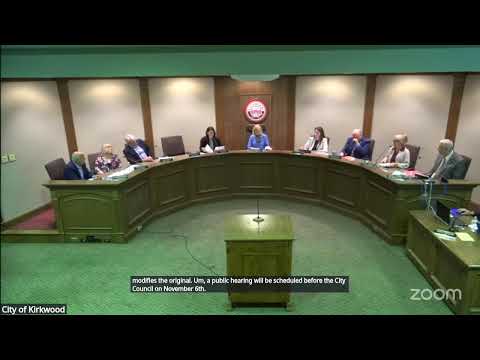
City staff proposed renaming and revising local "home occupation" rules to "no-impact home-based business" to comply with a 2022 Missouri law that preempts stricter local regulation. Council closed the public hearing and scheduled the amendment for first reading on Nov. 6.
City Planner Amy Lowry told the City Council on Oct. 16 that Missouri's 2022 legislation protects so-called "no-impact home-based businesses" from local bans or requirements for permits, licenses or prior approval when the activity meets criteria for being no-impact. To comply, staff drafted zoning code amendments that replace references to "home occupation" with "no-impact home-based business," add a statutory definition, and revise use-specific standards to allow such businesses to operate indoors and in rear yards as the state allows.
Lowry said the code changes were prepared in consultation with the city attorney and that the Planning & Zoning Commission recommended approval. Staff also described the city's administrative approach: applicants contact the city and complete a self-certification form identifying their business as "no-impact"; the city keeps the certification on file so it can respond if neighbors file complaints later. Enforcement of alleged impacts (noise, traffic, odors, dust, storage of hazardous materials) will be complaint-driven and assessed against the code standards; MSD or county public-health authorities may also have jurisdiction over specific public-health concerns.
Council members asked clarifying questions about corner lots (treated as two front yards under the city's ordinance), storage rules, accessory dwelling units and accessory structures (the code permits ADUs and accessory structures to host no-impact businesses so long as the property retains its residential character), and how the city will evaluate increases in traffic. Lowry said the state has not provided objective measurement tools, so staff will investigate complaints and make case-by-case determinations.
There were no public speakers for this hearing. The council closed the public hearing and staff will return with the ordinance for first reading on Nov. 6.
Provenance: Planner presentation began at 00:27:53; public hearing closed and item scheduled for first reading at 00:39:42.