Get Full Government Meeting Transcripts, Videos, & Alerts Forever!
Get email alerts on the Homelessness Programs topic
No spam. Unsubscribe anytime.
County details $418 million in homelessness investments; expands outreach and non‑congregate shelter beds
Summary
County homeless services staff outlined recent investments, outreach expansions and shelter openings and listed programmatic outcomes including outreach touches and housing exits. Officials cautioned many funds are one‑time and stressed need for long‑term, sustainable funding.
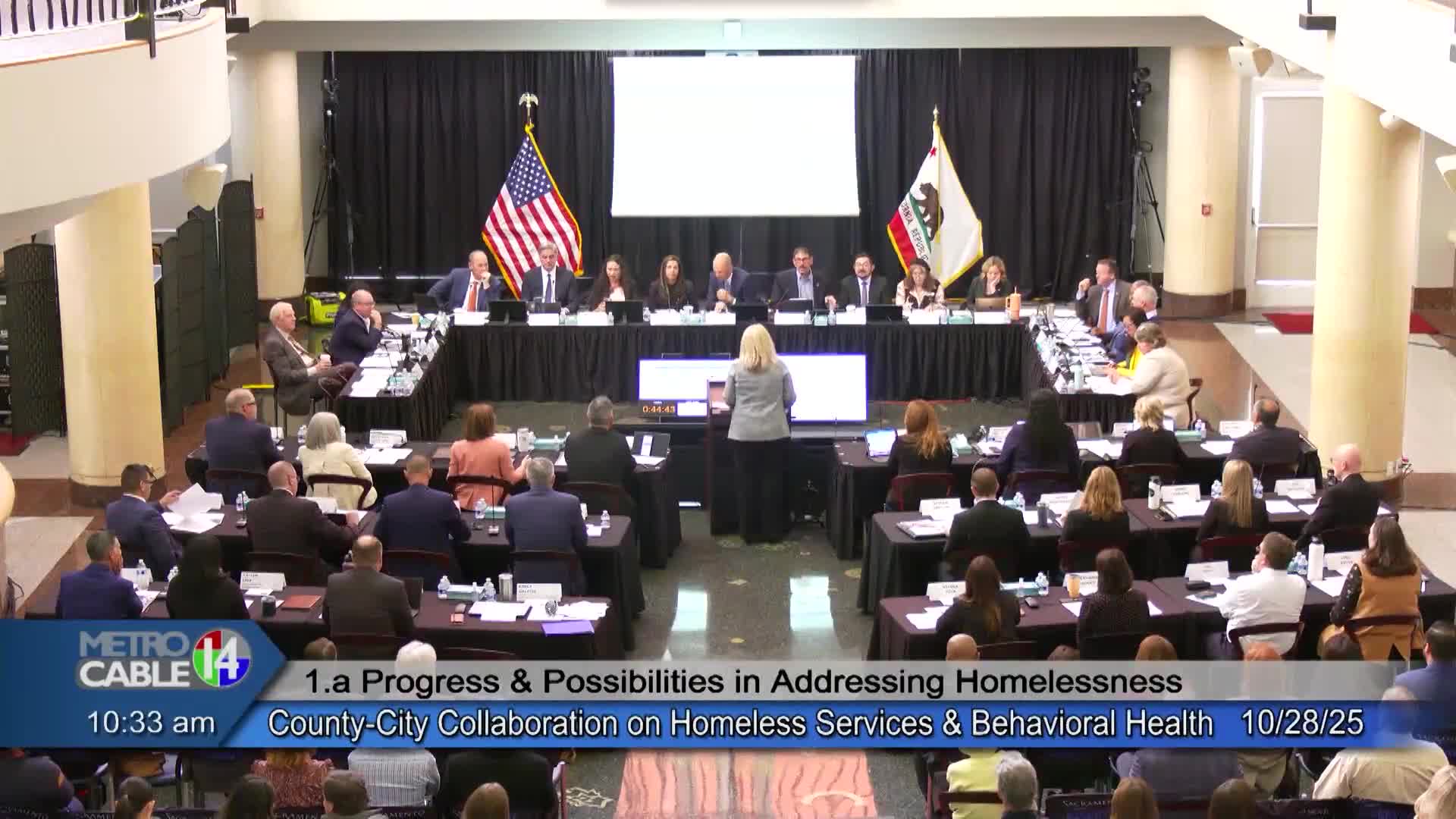
Sacramento County and city staff told elected leaders at the joint convening that recent investments have increased outreach capacity, shelter beds and permanent housing exits, but that many revenue streams are one‑time and long‑term sustainability remains a concern.
County Director of Homeless Services and Housing Emily Halcon said the most recent point‑in‑time count remains a limited snapshot but indicates important patterns: 33 percent of the county’s homeless population identified as Black compared with roughly 9 percent countywide; nearly 45 percent of counted people met the definition of chronic homelessness; and 62 percent of those counted identified as Sacramento residents. Halcon also estimated that the total community investment flowing through county budgets, city budgets and the continuum of care exceeded $418,000,000 in the most recent fiscal year; she said about two‑thirds of that total passes through the county budget.
Halcon described operational shifts countywide: expanded outreach teams that now provide intensive, repeated “case‑carrying” contacts; the county’s pivot to non‑congregate “safe stay” communities with more than 350 new beds opened since 2022 and another 225 expected early next year; and a planned 2026 flexible housing pool to centralize landlord engagement and tenancy supports tied to managed‑care plans. "We’re working to launch a flexible housing pool in 2026 in partnership with our managed care plans," Halcon said.
Cities described local programs that complement county resources. Citrus Heights highlighted Sunrise Point apartments (46 permanent supportive units) and an Auburn Oaks conversion (planned 88 affordable units). Elk Grove reported a year‑round leased shelter and a two‑person navigation team with a better‑than‑70 percent success rate in offering shelter. Folsom described Bidwell Street Studios (20 permanent supportive units funded by Homekey) and expanded outreach by police‑clinician teams. Rancho Cordova described a multi‑phase Veterans Village providing hundreds of supportive housing units; the city expects construction on a fourth phase to begin early next year. City of Sacramento Deputy Director Brian Pedro described incident management teams, micro‑community interim supportive housing and a street‑to‑housing rapid rehousing program that had filled nearly all of its initial 100 units.
Why it matters: presenters stressed that short‑term crisis interventions (outreach, safe stays, motel vouchers) must be paired with permanent exits and predictable ongoing funding. Halcon warned that many recent revenue sources — ARPA, Homekey and some state HAP allocations — are one‑time funds and local discretionary funding remains limited. "As we start to think about how the region might look at how we're gonna address homelessness together or differently, we must do it with a recognition that our actual discretionary funding is pretty limited," she said.
Ending: city and county staff will circulate line‑item program summaries and dashboards to follow up on requests for more granular data and funding breakdowns; electeds signaled intent to consider governance and joint advocacy that could stabilize long‑term funding.