
Board reviews federal shutdown impacts, adopts 2026 legislative platforms
Get AI-powered insights, summaries, and transcripts
Subscribe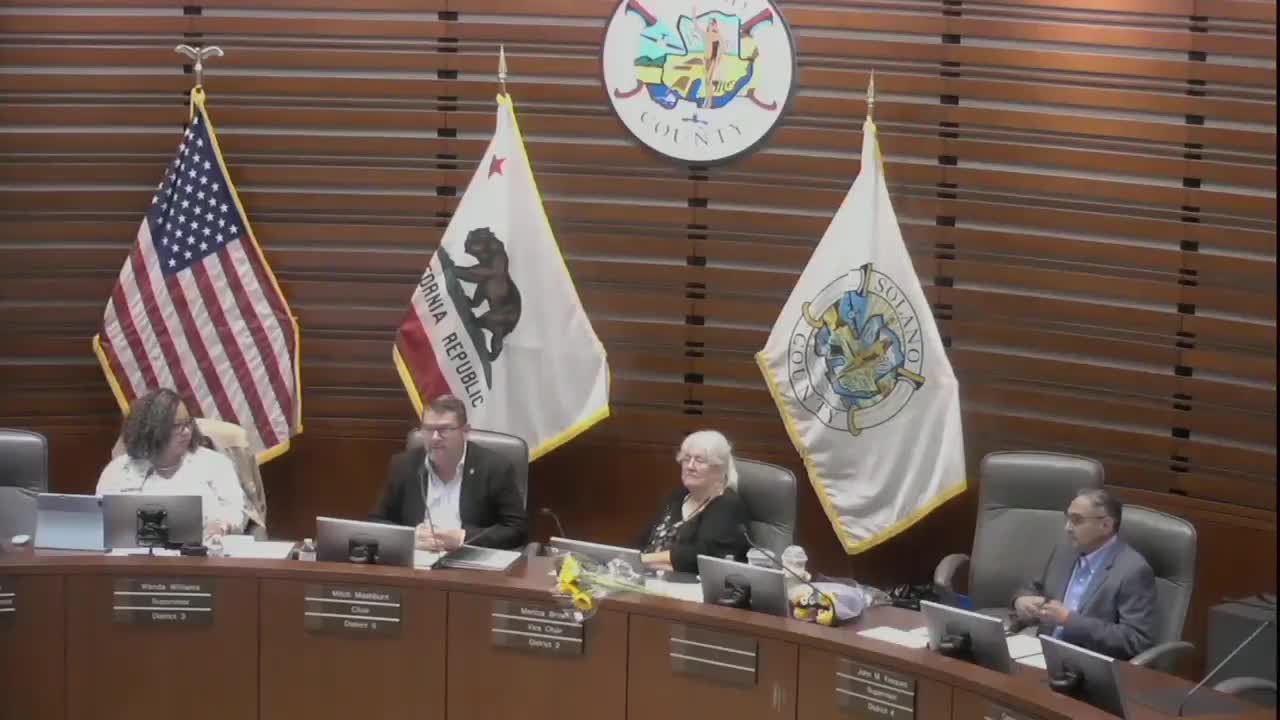
Summary
County lobbyists briefed the board on the federal government shutdown—s effects on SNAP, ACA subsidies and other programs and urged advocacy. The board adopted Solano County—s proposed 2026 federal and state legislative platforms and directed staff to continue outreach.
Federal and state lobbying teams updated the Solano County Board of Supervisors on Oct. 28 about the ongoing U.S. government shutdown and other state budget actions, and the board adopted its 2026 federal and state legislative platforms.
Hassan Sarsour and Tom Joseph of Paragon Government Relations summarized the federal picture: the government shutdown had already stretched longer than previous shutdowns, congressional negotiations had not produced a durable funding path, and there were immediate policy risks including a near‑term "food‑aid cliff" and potential disruptions to Affordable Care Act enhanced subsidies that aid low‑ and moderate‑income Californians.
Tom Joseph told the board that the U.S. Department of Agriculture had indicated it would not reimburse states that attempted to backfill SNAP/CalFresh benefits from state funds. He also said 5.5 million Californians were currently enrolled in CalFresh and that there was no simple federal workaround absent a congressional deal.
County state lobbyist Karen Lang reviewed state developments, including climate, wildfire resilience and utility rate provisions and the reauthorization and rebranding of cap-and-trade expenditures ("cap-and-invest"). She noted the governor—s upcoming Jan. 10 budget will be consequential for counties because HR 1 federal changes will shift program responsibilities and costs in coming years.
The board voted 5‑0 to approve Solano County—s 2026 federal and state legislative platforms, which staff said provide direction to county lobbying teams and departments on which bills to support, oppose or monitor.
Ending: Supervisors asked staff and lobbyists to continue monitoring SNAP, ACA and disaster‑reimbursement issues and to return with updates; staff also will distribute the approved platforms to legislative delegations and partner associations.