Get Full Government Meeting Transcripts, Videos, & Alerts Forever!
Get email alerts on the Incorporation topic
No spam. Unsubscribe anytime.
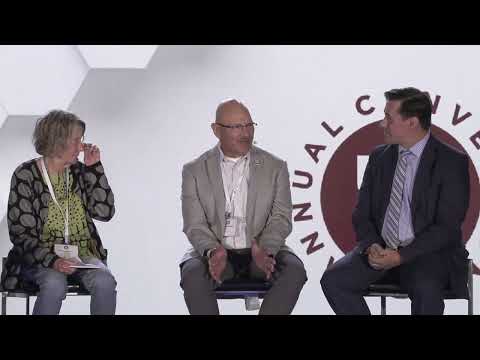
Mayors of Bluff and Mill Creek outline practical lessons from city incorporations
Summary
At a Utah League of Cities and Towns panel, the mayors of Bluff and Mill Creek described administrative pitfalls and practical steps for communities seeking to incorporate, including election certification, boundary-filing deadlines, county-service transitions, community-building strategies and early programmatic successes.
At a Utah League of Cities and Towns panel on Nov. 1, 2025, the mayors of Bluff and Mill Creek reviewed what they learned from leading newly incorporated cities, offering specific warnings about election mechanics, intergovernmental coordination and building civic institutions.
The discussion mattered because communities weighing incorporation must navigate state and county processes while establishing services and civic cohesion. Both mayors emphasized that technical deadlines and local relationships—rather than ideology—drive early success.
Bluff’s mayor said residents voted decisively to incorporate and that finalizing election certification proved unexpectedly difficult. “Three out of four of the voters wanted to incorporate,” the Bluff mayor said, and later warned, “don’t do a write in vote because you could win.” The mayor also recounted contacting state officials for certification help, noting that the lieutenant governor’s office administers incorporations.
Panelists flagged a separate procedural risk: missing a boundary-adjustment filing or failing to record it before the state’s Jan. 1 deadline can affect a new city’s tax revenue. One panelist recalled rushing to file so the city would receive tax distributions for the next year.
Both mayors described the staffing and governance learning curve. Starting a city, they said, is like a construction job: the earliest months require setting up administrative systems and hiring or contracting staff. Mill Creek’s mayor, who previously chaired a township board, said the council negotiated which services to keep with the county and which to take over, and that contracts remain in place where the county provides “good value.”
Geography and community events shaped civic cohesion. Bluff’s mayor said Bluff’s incorporated area covers about 36 square miles but that most population and activity are concentrated in roughly 1.5 miles; the city relies on festivals and hybrid meetings to bring people together. Mill Creek’s mayor said the city worked to bridge east–west socioeconomic divides through volunteer opportunities and a developing town center that hosts events.
Both mayors reported difficulty recruiting candidates after initial enthusiasm. Panelists recalled early cycles with high candidate turnout—one said roughly 50 people filed in the first cycles and nine filed for mayor—followed by later uncontested races and recent filings that left seats unopposed.
On intergovernmental relations, Bluff’s mayor described a period of close coordination with San Juan County but also occasional service surprises—such as conflicting online guidance about which office issues addresses. Mill Creek’s mayor said negotiating service contracts with Salt Lake County helped smooth the transition.
The mayors also highlighted early policy and infrastructure wins. Bluff emphasized close coordination with the Navajo Nation and a coordinated COVID-19 response shortly after incorporation; Mill Creek pointed to its Promise program supporting after-school activities, a new civic center, and securing a bond rating within nine years.
The session closed with both mayors thanking the Utah League of Cities and Towns, peers and state officials for mentorship and technical assistance. “I reached out to the league. I reached out to the lieutenant governor’s office a lot,” the Bluff mayor said, adding appreciation for the help that eased the transition.
Looking forward, both panelists urged communities considering incorporation to do early stakeholder mapping, plan staffing and finances carefully, and pay close attention to election mechanics and filing deadlines that affect revenue and certification.