Lifetime Citizen Portal Access — AI Briefings, Alerts & Unlimited Follows
DRCOG community-based transportation planning set-aside emphasizes equity and community engagement
Loading...
Summary
DRCOG described the community-based transportation planning set-aside as a community-driven technical assistance program focused on historically marginalized communities; DRCOG recommends a $100,000 minimum project request.
DRCOG staff presented the community-based transportation planning (CBTP) set-aside as a technical assistance program intended to support planning and studies that improve mobility for historically marginalized communities. Britney, a multimodal planner at DRCOG, said community engagement is central to the set-aside and that DRCOG prioritizes projects that are community-driven and partner with community-based organizations.
Funding: DRCOG said about $2.5 million is allocated to the CBTP set-aside. The webinar recording includes a statement about the amount available for this call that was not clearly transcribed; DRCOG staff encouraged applicants to consult staff for clarification on available funds for the current call. DRCOG recommends a project minimum of $100,000.
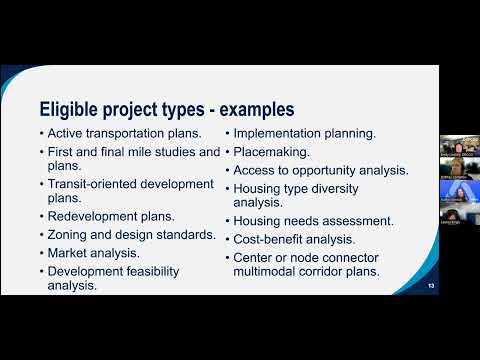
Eligible projects and examples: DRCOG said eligible work includes corridor studies, active transportation and safety improvements, microtransit, school transportation planning and related mobility studies. Lauren Kurges, a DRCOG multimodal planner, cited examples of prior projects: the Montbello Loop and 303 Artway (walking and biking improvements in Montbello and Northeast Park Hill), corridor studies such as the Pecos Corridor, the "90 Second Avenue" corridor pedestrian safety work, a multimodal connectivity study for a housing authority, and demonstration projects such as a curb-space restriping and temporary materials deployment in front of Lundberg Elementary in Edgewater.
Engagement and partnerships: DRCOG said applicants should describe specific engagement strategies, identify community-based organizations or other partners, and explain prior engagement challenges and how the project would address them. For nonprofits applying, staff said the proposal should include documented support from relevant local governments because implementation frequently requires government action.
Application: DRCOG will accept a Formstack letter of interest by Nov. 15; staff urged applicants to schedule a consultation through the bookings link to discuss eligibility and competitive approaches.