Lifetime Citizen Portal Access — AI Briefings, Alerts & Unlimited Follows
DRCOG livable centers set-aside funds small-area plans; recommends $100,000 minimum
Loading...
Summary
DRCOG set aside $2.5 million for livable centers small-area planning in the 2024–2027 TIP; for this call staff said they expect to award up to $835,000 and recommended applicants request at least $100,000. Funds cover consultant-led conceptual plans (not design or engineering) that link land-use/housing strategies with multimodal transportation.
The Denver Regional Council of Governments said the livable centers set-aside has $2,500,000 allocated in the 2024–2027 Transportation Improvement Program and that, for this call, DRCOG expects to award up to $835,000. DRCOG staff recommended that applicants request at least $100,000 to ensure projects are well resourced.
DRCOG said funding supports consultant-led conceptual small-area plans — explicitly not design or engineering — intended to advance livability in local centers or nodes that connect to the region's multimodal transportation system. Caitlin Service, DRCOG program manager of regional planning, said the program's core tenets are that a project location be a center or node on the regional multimodal system and that the planning work integrate a land-use or housing strategy with a multimodal transportation strategy.
Eligibility and scope: DRCOG said livable centers projects are intended for small-area planning (examples include town centers, transit station areas or employment hubs) rather than citywide or countywide plans. DRCOG encourages applicants to reference the DRCOG data tool and the program web page when describing how a project location connects to the region's multimodal transportation system.
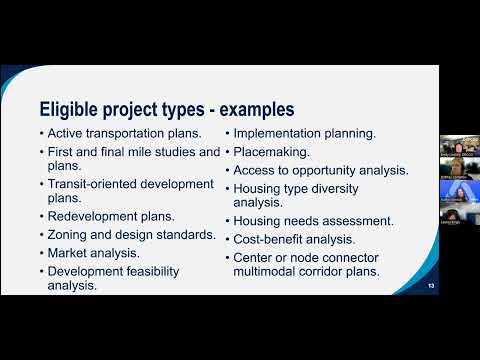
Examples and guidance: Staff noted prior awards ranged between about $100,000 and $300,000 and cited examples such as housing strategy near transit, small-area planning around station areas, multimodal connectivity studies for housing authorities, and transportation demand management (TDM) studies for employment centers. DRCOG encouraged applicants to emphasize how proposed work connects land use or housing strategies with multimodal transportation.
Application: Applicants should submit a Formstack letter of interest by Nov. 15 and may consult DRCOG staff to discuss competitiveness and eligibility.