
BOE votes to form 2026 work group to standardize valuation of intangible assets
Get AI-powered insights, summaries, and transcripts
Sign Up Free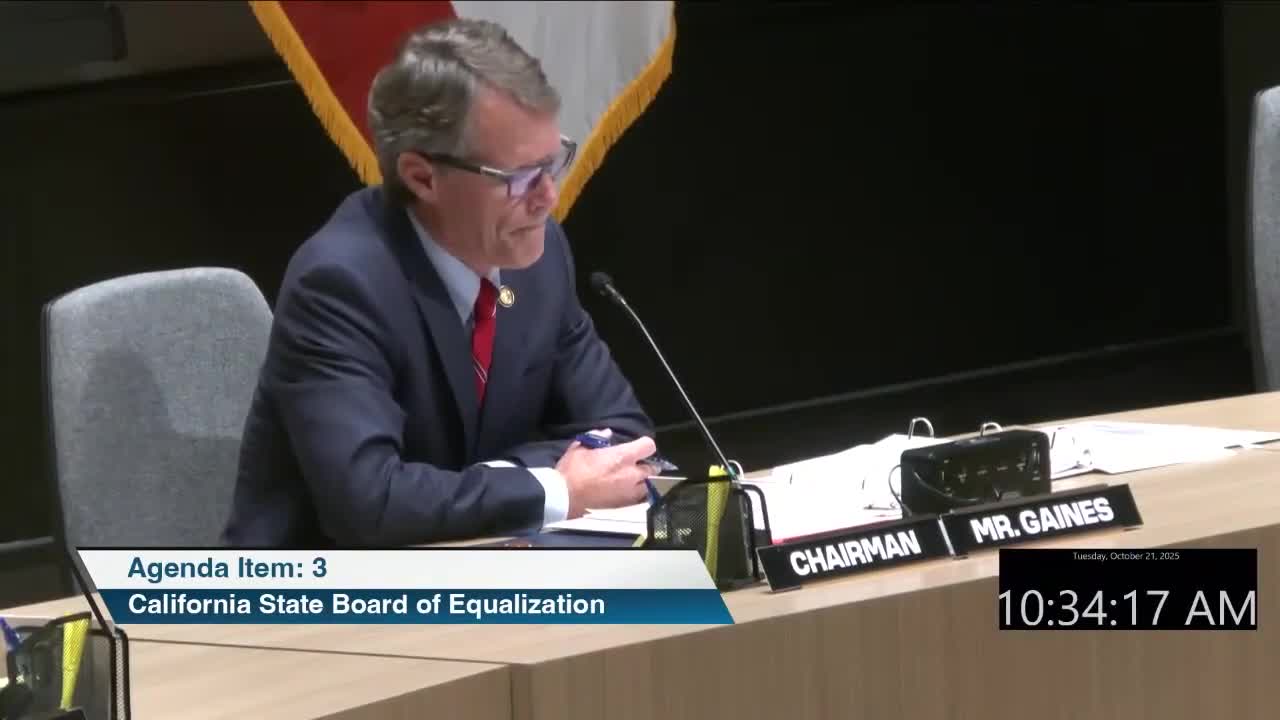
Summary
The Board of Equalization on Oct. 21 voted to establish a 2026 work group to address inconsistencies in how counties value intangible assets and rights and to recommend updates to the BOE Assessor’s Handbook section 502.
The Board of Equalization on Oct. 21 voted to establish a 2026 work group to address inconsistencies in how counties value intangible assets and rights and to recommend updates to the BOE Assessor’s Handbook section 502.
Controller Cohen, who introduced the proposal, told the board the assessor’s handbook on intangibles has not been updated since 1998 and that subsequent California Supreme Court and Court of Appeal decisions have created new legal precedents the handbook does not reflect. “I propose that the board approve the convening of a board working group to explore these methodologies and create recommendations,” Controller Cohen said.
The work group will convene multiple sessions in 2026 — proposed months discussed were April, June and September — and is charged with issuing recommendations to the board by November 2026. Chief Counsel Richard Moon said staff would review proposed language produced by the group and provide comments to the board before any final adoption.
Members of the public and taxpayer organizations urged the board to act. Mark Aprea of the California Alliance of Taxpayer Advocates and J.C. Lee of the California Taxpayers Association told the board that the field has changed since 1998, citing court cases and inconsistent practice across counties. “We are committed to engaging with the work group so that a good and solid body of recommendations are made,” Aprea said.
Vice Chair Lieber moved to establish the work group; Member Vasquez seconded. Miss Cicchetti called the roll and recorded ayes from Chairman Gaines, Vice Chair Lieber, Member Vasquez, Member Schaeffer and Controller Cohen; the motion passed.
What the board asked for: the work group will (1) examine valuation methods for intangible assets and rights; (2) consult assessors, taxpayer representatives and technical experts; (3) draft recommended updates to Assessor’s Handbook section 502; and (4) provide a final set of recommendations to the board on or before November 2026.
Why it matters: Intangible assets — for example goodwill and other nonphysical property interests — can materially affect assessed value for large properties and business enterprises. The board and public commenters said uneven county practices can produce variable tax outcomes and uncertainty for taxpayers and local taxing agencies.
Next steps: Staff will schedule the work-group meetings in calendar months discussed and report progress to the board; the work group’s recommendations will come back to the board for review and possible adoption before November 2026.