Get AI Briefings, Transcripts & Alerts on Local & National Government Meetings — Forever.
Berwyn council adopts executive order limiting federal immigration operations on city property and clarifies tree-board duties
Loading...
Summary
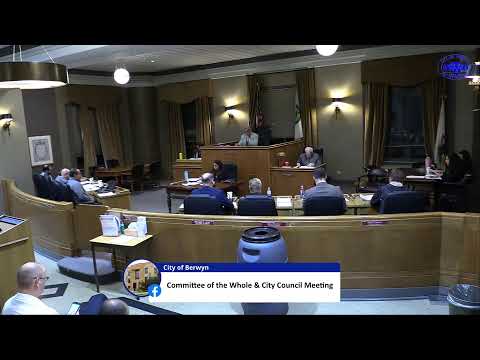
Berwyn’s City Council voted to adopt a mayoral executive order barring the use of city property and personnel for federal immigration enforcement operations after multiple public comments urging limits on surveillance and data-sharing.
Berwyn’s City Council heard multiple public comments about surveillance technology and federal immigration enforcement before voting to adopt an executive order restricting use of city property and personnel for federal immigration operations.
Several residents, students and community advocates urged the council to block access to city-held data and to protect residents from federal enforcement actions on city property. Tim Swanson, who spoke during public comment, presented documents he said show Flock Safety data has been used outside Illinois and called for the city to terminate or restrict data-sharing agreements.
Following public comment, the council voted to concur with Mayor Loverro’s executive order that prohibits the use of city property, Berwyn Police Department and other city resources for federal immigration enforcement operations. A roll-call vote was recorded as 8 ayes; the executive order will be affixed with the necessary signatures and becomes a city policy statement pending operational implementation.
The council also adopted an ordinance amending Chapter 2.84 of the codified ordinances to clarify the duties of the city tree board after public remarks from the Berwyn Tree Canopy Initiative in support of formalizing board responsibilities. Aldermen thanked the organizer group and noted the ordinance will help implement the city’s urban forestry plan; the ordinance passed by roll call (8 ayes).
Other administrative matters advanced during the meeting: council authorized the mayor’s communication to the governor calling for a statewide prohibition on using public property for federal immigration operations, referred proposed video-gaming licensing ordinance amendments to the Committee of the Whole for further review, authorized an RFP for professional auditing services, and approved several settlements and a tax-anticipation warrant ordinance. Those items were adopted as part of the consent agenda, and roll calls on settlements and worker-compensation items also recorded affirmative votes (see “Votes at a glance” below).
Council members and staff said operational details—how the executive order will be enforced, how the police department will handle requests for data, and how the city will communicate protections to residents—will require follow-up. The mayor’s office said bilingual “Know Your Rights” materials and signage are being prepared for parks, library and other public locations and that translations will be distributed once available.
Ending: The council completed the meeting with routine administrative approvals and scheduled committee meetings; the executive order and tree-board ordinance were the most substantive policy actions taken.