
Austin ISD CFO warns district may need $19 million short-term loan to cover Nov. 30 payroll
Get AI-powered insights, summaries, and transcripts
Sign Up Free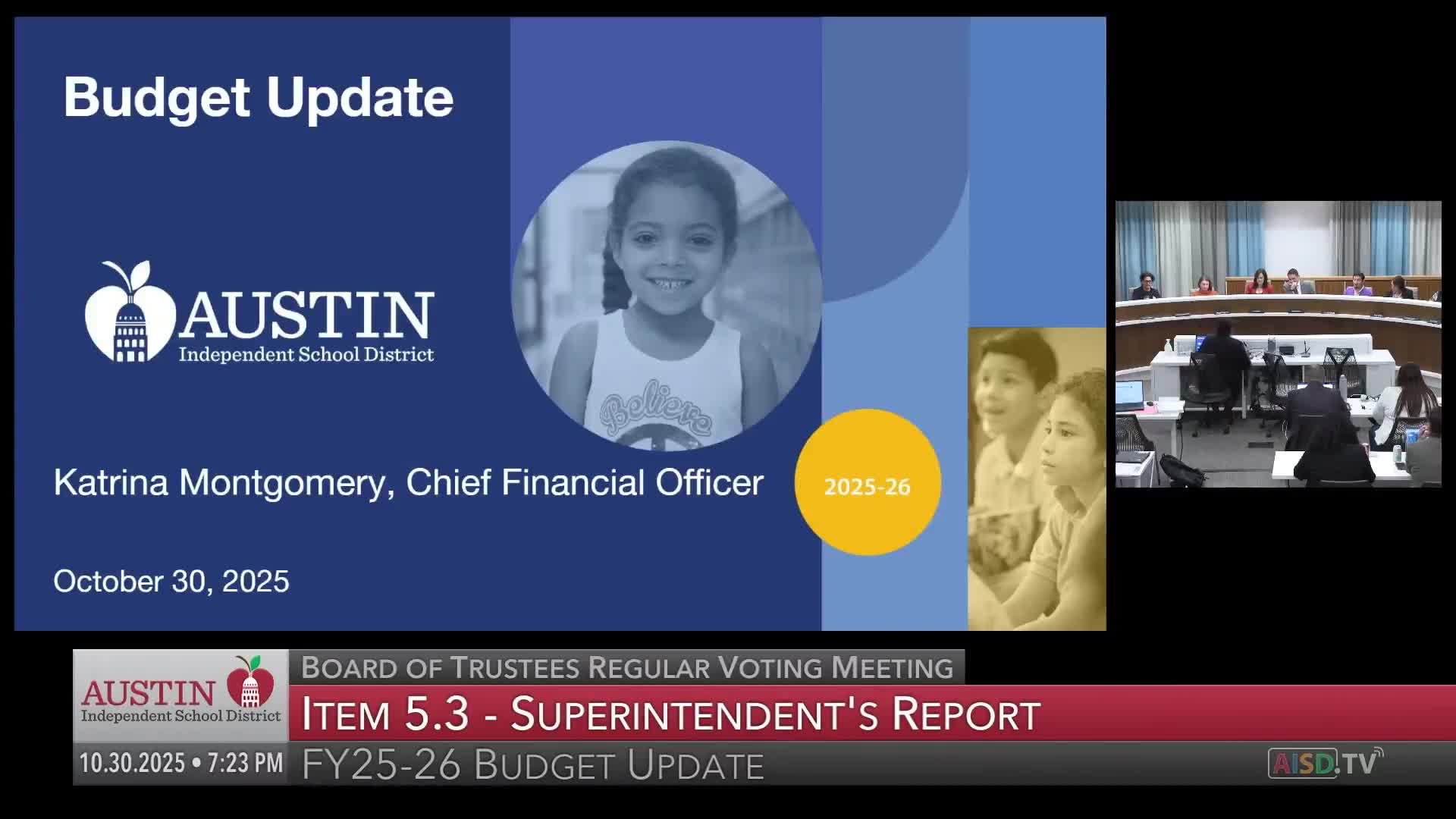
Summary
Katrina Montgomery, Austin ISD’s chief financial officer, told trustees on Oct. 30 that unaudited FY24‑25 results show a projected $79 million deficit and recommended a minimal $19 million tax-and-revenue anticipation note (TAN) to ensure the district can meet its Nov. 30 payroll.
Katrina Montgomery, Austin ISD’s chief financial officer, told trustees on Oct. 30 that the district’s unaudited FY24‑25 results show a projected deficit near $79 million and that a short-term borrowing plan is needed to avoid missing the Nov. 30 payroll.
‘‘As of Nov. 30, we will not be in the place to make payroll,’’ Montgomery said, explaining that tax collections are delayed until mid-November and that, combined with the district’s cash burn, creates a narrow window of risk. She told the board the administration is recommending a minimal tax-and-revenue anticipation note (TAN) of $19 million to bridge the cash gap; the proposal carries an estimated interest rate of 4.67% and a repayment date of Jan. 13, 2026. Montgomery said advisers recommended a larger borrowing amount but the district is seeking the smallest possible loan to limit fees and interest costs.
Montgomery summarized FY figures presented to trustees: a $992 million operating budget for FY25‑26, an estimated recapture near $715 million, and an unaudited FY24‑25 net change that the district projects at a $79 million deficit. The board-approved fund-balance policy targets a 15% fund balance across years one through three and 20% in the final year; Montgomery said with required reductions the district estimates ending the year above 15% (about 17.48% as presented in the amendment scenario).
Trustees pressed for causes and the administration described drivers including repeatedly adopted deficit budgets in recent years, delays in tax revenue related to statewide homestead-exemption timing and the timing of statewide elections that affect collections. Montgomery and Superintendent Segura emphasized the district is managing cash conservatively and that the TAN is intended as a short-term, minimal borrowing to cover a predictable mid-fiscal-year cash timing shortfall rather than unplanned overspending.
Why it matters: Missing payroll would immediately affect employees and operations. The short-term loan would incur interest and fees and has budgeting implications; trustees asked administration to consider whether the fund-balance policy target should be adjusted in future years.
Next steps: Administration presented a TAN request to trustees and invited questions; trustees asked for continued weekly monitoring and options for longer-term policy changes to increase financial resilience.