Get Full Government Meeting Transcripts, Videos, & Alerts Forever!
Get email alerts on the Fire Medical Plan topic
No spam. Unsubscribe anytime.
Interim fire chief outlines station plans, wellness programs and paramedic pipeline
Summary
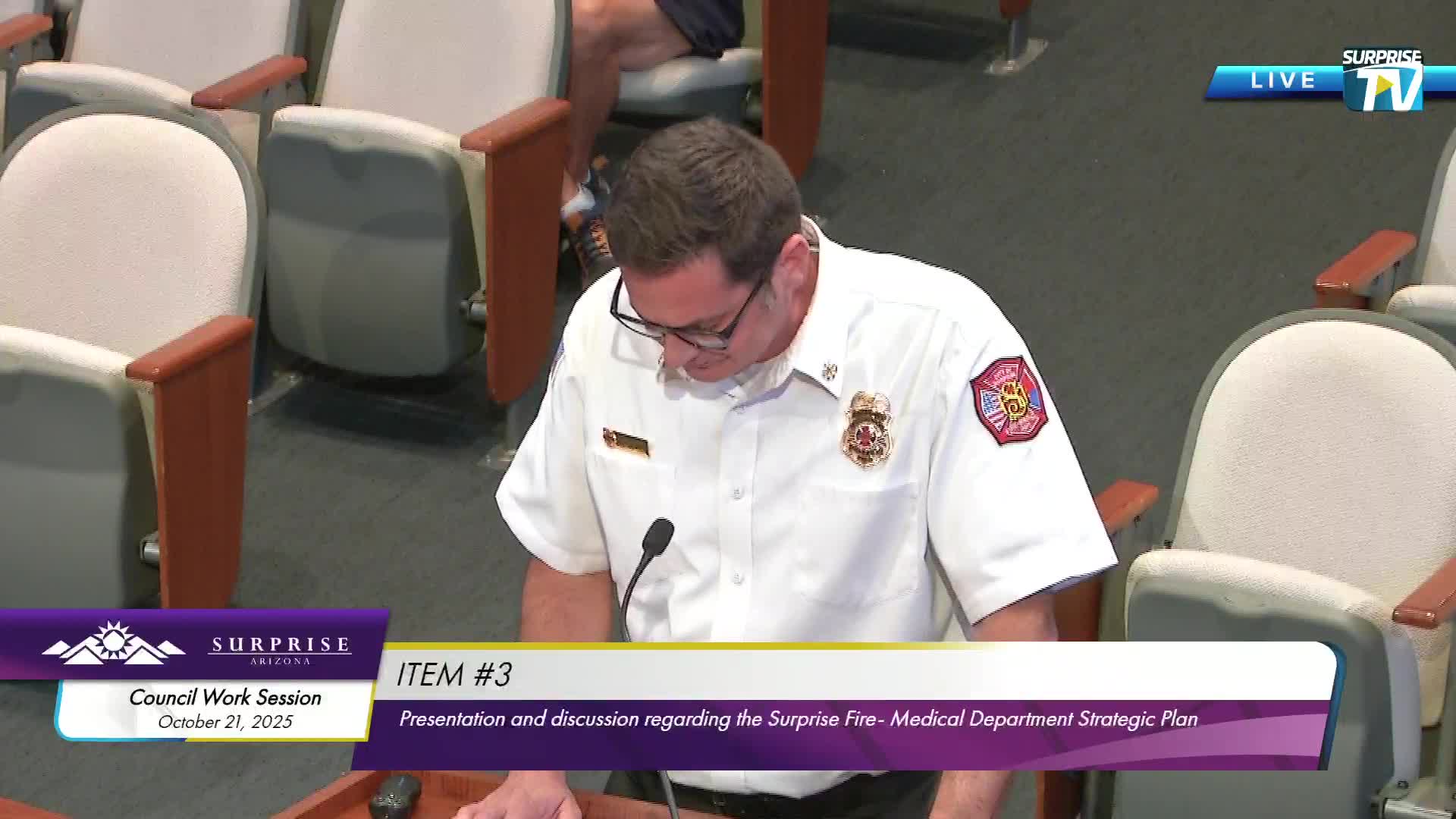
The Surprise Fire Medical Department presented its strategic plan Oct. 21, emphasizing a new Safety & Member Services division for firefighter health, plans for Fire Station 310, international accreditation, expansion of community paramedicine and steps to reduce occupational cancer risk including decontamination and two sets of turnouts.
Interim Fire Chief (name not specified in the transcript) presented the Surprise Fire Medical Department strategic plan at the Oct. 21 work session, outlining staffing, facilities and wellness initiatives designed to support a growing city.
The chief introduced deputy chiefs Randy Friceto (operations), Jesus Rivera (EMS) and Cody Worrell (fire administration), Battalion Chief Forrest Koontz (safety and member services) and Fire and Life Safety Education Specialist Jamie Mickler. The department—s mission, the presenter said, is "to protect and preserve life and property with the highest level of safety, customer service, pride, and professionalism. Always there, always ready."
Key items in the presentation included the design and planned opening of Fire Station 310 (located near Deer Valley Road and 180th Avenue) in about two years; ongoing training and recruitment, with multiple fire academies planned; and a newly formed Safety & Member Services division focused on exposure tracking, annual physicals, cancer screenings and wellness programs.
The department noted it earned international accreditation from the Center for Public Safety Excellence in March 2025 (its second time) and has published a community risk assessment and standards of cover online. The chief also described regional mutual-aid and automatic-aid arrangements and said the department supports the city—s public safety master plan work with consultant Citygate.
On training and staffing the chief said the department has paramedic training underway: "We currently have 14 paramedic students in the training pipeline." He said workforce data show a large share of personnel are recent hires (the chief reported about 42% of the organization have less than five years of service), and described retirement tiers that affect hiring and retention.
The chief emphasized member health measures to address occupational cancer risk: instituting decontamination at scenes, providing two sets of turnouts so contaminated gear can be removed and isolated, and adding recovery and therapy resources through partnerships. "After a fire ... the first thing they do before anything else is they take a shower," the chief said, describing updated on-scene and station decontamination practices.
Council members praised fire and EMS staff for regional support during recent events and for responses to protests and storms. Questions and discussion focused on staffing, training pipeline challenges, regional support and post-employment health protections; the chief said some presumptive cancer statutes apply and that staff would provide additional technical details as needed.
No formal action was taken; council members expressed support for continued hiring and health investments.