
Caltrans landscape architect outlines green stormwater BMPs and Complete Streets guidance
Get AI-powered insights, summaries, and transcripts
Subscribe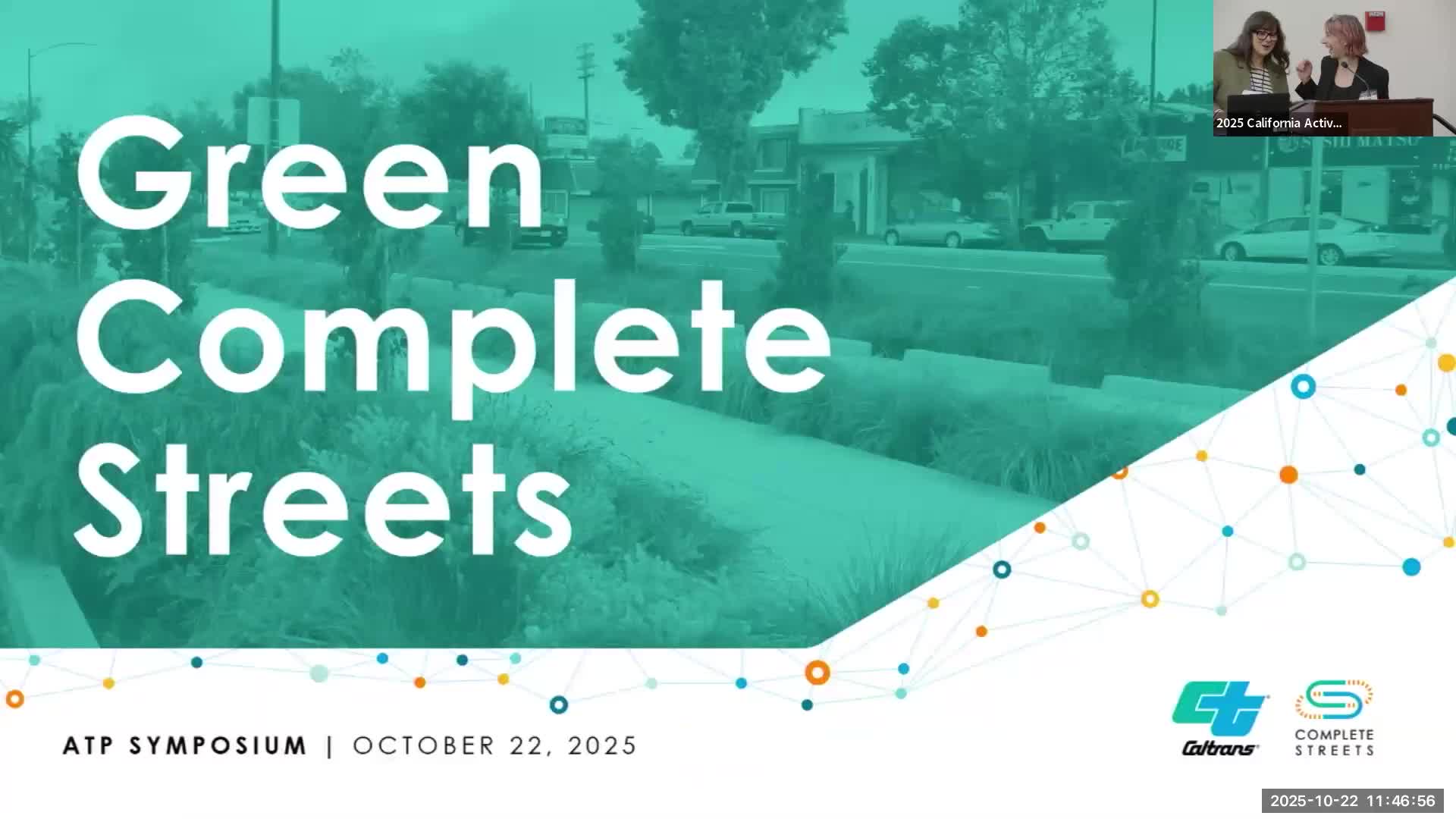
Summary
Adrian St. John of Caltrans reviewed Design Information Bulletin 94 and stormwater treatment options for complete streets, including bioretention, biofiltration swales, detention basins and pervious pavement. She highlighted regulatory context (NPDES/PDES and regional water boards) and maintenance requirements.
Adrian St. John, supervising landscape architect in Caltrans’ Complete Streets Design Office, described how green stormwater infrastructure (GSI) can be integrated into constrained rights‑of‑way under Design Information Bulletin 94. She framed GSI as both a stormwater quality tool and a means to add shade, planting and social value to corridors.
St. John outlined common GSI features used in streetscapes: bioretention (engineered planting cells with media and a reservoir), biofiltration strips and swales (vegetated conveyance and treatment), detention basins (neighborhood‑scale storage) and pervious pavement (with operation and maintenance caveats). She emphasized that project thresholds for treatment vary by region because the nine California regional water quality control boards administer NPDES/PDES permits and treatment requirements.
“Bioretention… is going to have generally an engineered soil section,” she said, noting design choices such as lined vs. unlined systems, curb cuts to route gutter flow into tree wells, and subgrade reservoirs to sustain tree health without surface heave.
St. John showed Caltrans project examples (Eureka bioretention cells, El Cerrito separated bikeway with tree wells, Richmond corridor ATP project) that combine bikeway separation, stormwater treatment and interpretive signage. She noted the Richmond corridor treated multiple intersections with bio‑retention, planted 200+ trees, and reported a decline in collisions along the corridor from 145 in 2018 to 50 in 2023.
Why it matters: integrating treatment into corridors helps meet water permits, reduce runoff and provide co‑benefits for heat mitigation and safety. St. John also cautioned that maintenance is critical — pervious pavement and bioretention rely on upkeep — and urged agencies to coordinate with local maintenance entities and leverage existing technical manuals and out‑of‑state resources (Minnesota, Portland) where helpful.
What she did not do: St. John presented guidance and project examples; she did not announce regulatory changes or new statewide mandates at the session.