Get Full Government Meeting Transcripts, Videos, & Alerts Forever!
Get email alerts on the Annexation topic
No spam. Unsubscribe anytime.
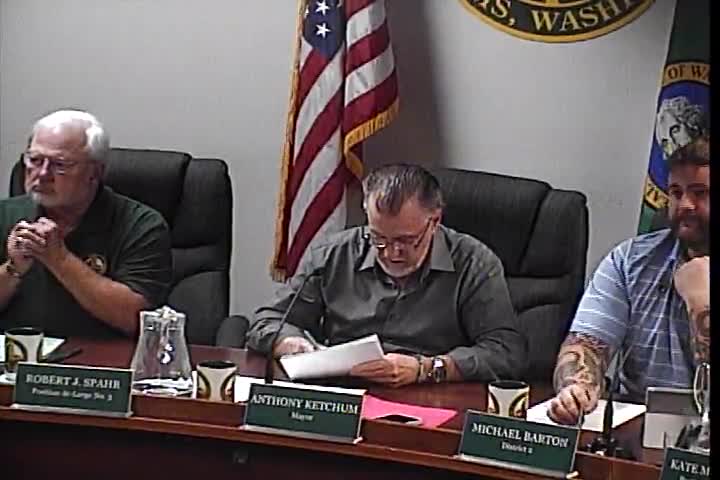
Chehalis council hears detailed fiscal, staffing implications of proposed UGA annexation
Summary
City Manager briefed the council on revenue estimates and service costs tied to a proposed annexation of parts of the urban growth area, including potential additional stormwater revenue, options for fire-service mergers, and recruitment and capital needs for police, streets and public works.
Chehalis City Manager gave the council a multi-part briefing on the proposed urban growth-area annexation, outlining projected revenues, service demands and options for limiting one-time and ongoing expenses.
The city manager told the council the most conservative revenue estimate is about $2.2 million in general-fund revenue (before changes tied to the city's EMS levy status) and that stormwater fee revenue from the annexed area could add roughly $500,000 annually. The city would also receive a one-time county payment for lane-mile maintenance estimated at roughly $275,000'$300,000 at the time of annexation, the manager said.
Why it matters: annexation changes who pays for and who provides local services (fire, police, streets, sewer, stormwater). The briefing mapped several scenarios the council will negotiate with neighboring special districts and the county.
Key details from the staff presentation: - Fire protection: if the city does not pursue a merger or functional consolidation with the existing fire districts, staff estimated the city would need to hire about seven additional firefighters to provide adequate coverage for the enlarged footprint. The city manager said that would also likely trigger remodeling or construction of a substation in the annexed area, with a preliminary cost estimate up to about $1 million depending on location and scope. Staff described an alternative path in which a merger or functional agreement with the adjacent district(s) would reduce staffing and facility needs for the city. - Streets and stormwater: the city would begin collecting stormwater fees in the annexed area (staff estimated roughly $500,000 annually). The city's street-maintenance workload would increase; staff recommended initial contracting with Lewis County for some maintenance until city resources or equipment are available. Two additional street crew positions were identified as a near-term need (salary/benefits estimated in the mid-five-figure range per position). - Wastewater/water: customers who connect to city wastewater systems would see existing discounts noted by staff (30% reduction referenced in the briefing), and customers that take city water would receive a 10% reduction; the city would inherit assets and reserve funds from Sewer District 4 should that district be annexed or transfer operations, and staff said District 4 currently holds roughly $1 million in funds that could transfer with the system. - Police: staff noted a possible need for two additional officers in the medium term depending on final footprint and call volumes; ongoing personnel, vehicle and equipment costs were estimated around $300,000 annually for two officers. - One-time costs: staff estimated the city may pay for a detailed census (roughly $25,000) and additional permitting, nuisance-abatement and building-inspection capacity; some capital needs (culvert or roadway projects) would depend on which county projects proceed to completion.
Staff stressed those figures are preliminary estimates subject to negotiation with fire districts, Lewis County and other partners. Several council members asked for written commitments before final action, and the manager said staff will return with more detailed cost-sharing scenarios and potential interlocal agreements.
Next steps: staff said it will continue outreach to affected jurisdictions and property owners, pursue more concrete written commitments for proposed benefactor assistance on a substation if available, and bring back refined fiscal analyses to council for subsequent decisions.