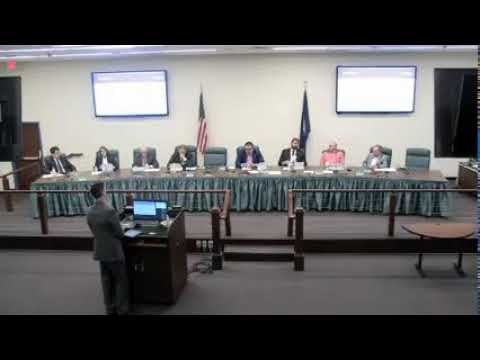
Marine Resources Commission adopts SMAC-recommended oyster seasons and related rule changes
Loading...
Summary
The Virginia Marine Resources Commission on Oct. 2025 adopted the Shellfish Management Advisory Committee’s recommended 2025–26 public oyster harvest seasons and related conservation and gear‑definition changes, including allowing mechanically assisted hand tongs for harvest of clean oysters and a narrow hardship exception for user‑fee transfers.
The Virginia Marine Resources Commission on Oct. 2025 voted to adopt the Shellfish Management Advisory Committee’s recommended public oyster harvest seasons and related conservation measures for 2025–26, including allowing mechanically assisted hand tongs for harvest of clean‑market oysters and an administrative exception process for oyster user‑fee transfers in hardship cases. Associate Member AJ Headley moved to adopt the recommended amendments; the motion passed after debate. The commission later approved related nomenclature and administrative language edits to align chapter references.
SMAC and staff reported that the recommendations are informed by the agency’s joint stock assessments with the Virginia Institute of Marine Science (VIMS) and by SMAC’s July and August deliberations. SMAC recommended maintaining short seasonal openings in Areas 7 and 8 of the Rappahannock River (one month in each area under the emergency rule that had been adopted in September) and other status‑quo conservation measures such as the three‑year rotation in lower Rappahannock reaches and vessel limits. Staff also proposed a narrow “hardship” transfer exception for oyster user fees, a timing change (May time‑of‑day to 11 a.m. consistency), and non‑substantive cleanup to reflect the shellfish management division’s current organizational name.
Watermen and industry representatives gave mixed views during the public hearing. SMAC members and the Virginia Watermen’s Association representatives said the short, rotational openings in Areas 7 and 8 have performed well and protect product quality and local markets. JC Hudgins, representing the Virginia Watermen’s Association and a SMAC member, said, “If it ain’t broke, don’t fix it,” urging the commission to keep the current short‑season approach in Areas 7 and 8. Several watermen and industry members favored the status‑quo SMAC proposal and warned that opening a new Area 10 or implementing a different rotation now could concentrate effort on immature or unstable bottom.
By contrast, members of the Blue Ribbon Oyster Panel and VIMS researchers presented analysis supporting exploration of a three‑way rotation in the upper Rappahannock (a proposal that would reconfigure Areas 7–8 into three management units). Blue Ribbon panel members argued the standing stocks in some parts of the upper Rappahannock could support a rotational strategy and that a three‑way rotation could yield long‑term benefits for stock stability and replenishment targeting.
The commission’s action: it adopted the SMAC‑recommended public harvest seasons and related measures and separately approved the administrative language updates; votes were recorded in the public meeting minutes. The adopted rules include the mechanically assisted hand‑tong allowance for clean oysters and a commissioner‑level hardship exception for user‑fee transfers. Staff said emergency provisions adopted in September were made permanent through these regulatory actions.
The commission directed staff to continue monitoring harvest effects and to report back with data from stock assessments and post‑harvest surveys to inform future season or rotation decisions.