Get Full Government Meeting Transcripts, Videos, & Alerts Forever!
Get email alerts on the Natural Gas Regulation topic
No spam. Unsubscribe anytime.
House Energy Committee advances substitute for bill to let gas utilities use alternative rate plans, adds valuation and confidentiality rules
Summary
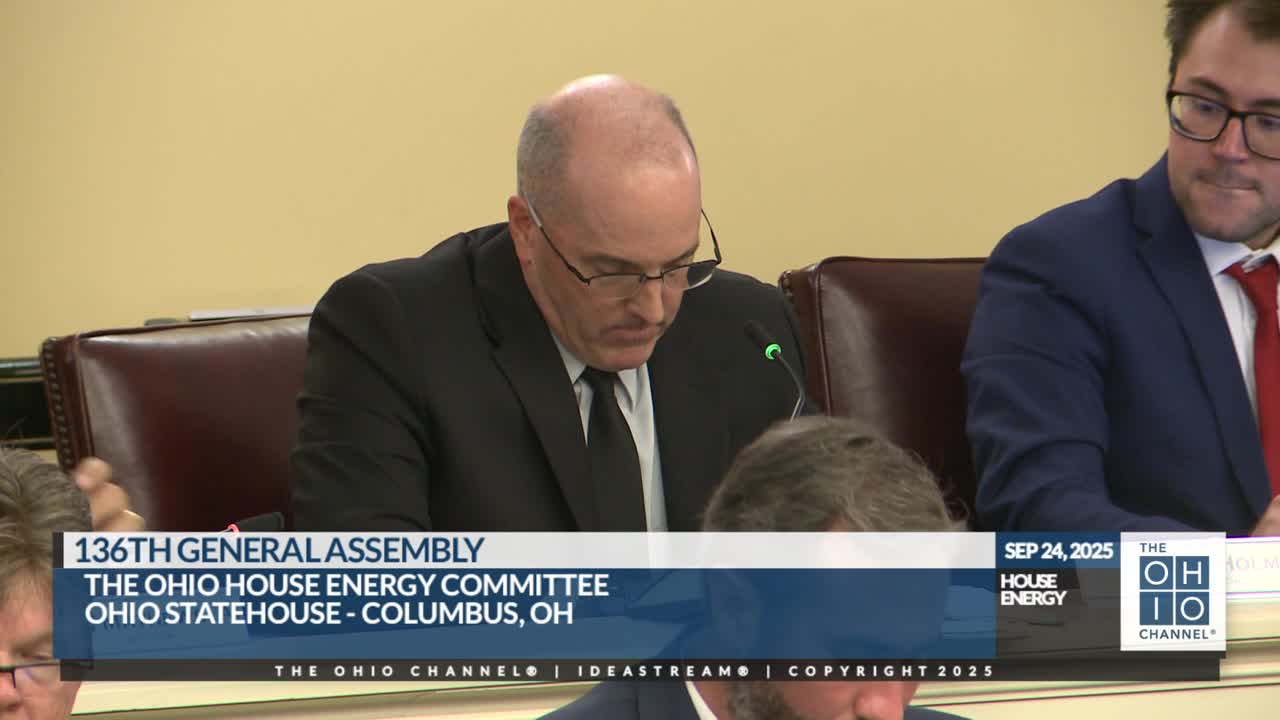
The House Energy Committee at a mid-session meeting advanced a substitute version of House Bill 142 aimed at allowing natural gas companies to use alternative rate plans to serve very large customers and modernizing how utility property is valued for regulation.
The House Energy Committee at a mid-session meeting advanced a substitute version of House Bill 142 aimed at allowing natural gas companies to use alternative rate plans to serve very large customers and modernizing how utility property is valued for regulation.
Representative Davila, the bill sponsor, told the committee the dash-3 substitute keeps the bill’s core purposes but adds procedural and confidentiality refinements. “First, to allow natural gas companies to use alternative rate plans to serve very large load customers and second, to modernize the process by which the Public Utilities Commission values natural gas company property,” Representative Davila said.
The substitute adds a new statutory provision, cited in committee as Section 4909.042, to set procedures for utilities filing valuation reports when using a forecasted test period. The substitute also more clearly distinguishes between valuations for current property and those based on projected assets, and it adds confidentiality safeguards for proprietary or trade-secret information companies file with the Public Utilities Commission of Ohio (PUCO).
Committee action and next steps
Representative Davila moved adoption of the dash-3 substitute. The committee also considered an amendment during the hearing; by voice the motion to amend was agreed to without objection and the amendment was made part of the bill. Committee leadership stated the amendment would be available for at least a week to allow members and stakeholders time to review before additional testimony is taken.
Why it matters
Sponsor and committee members framed the bill as balancing flexibility for utilities that serve large, dynamic energy customers with protections for ratepayers and regulatory consistency. The forecasted-test-period procedures and valuation clarifications are intended to provide a consistent approach for PUCO reviews; confidentiality provisions are intended to protect commercially sensitive filings while preserving regulatory oversight.
No public testimony was taken at this hearing; the committee concluded the fifth hearing on House Bill 142 and signaled further review and potential testimony after members have time to examine the adopted amendment.