Get Full Government Meeting Transcripts, Videos, & Alerts Forever!
Get email alerts on the Health Insurance topic
No spam. Unsubscribe anytime.
District outlines plan to curb rising health costs, ties HSA incentive to new Innovia clinic
Summary
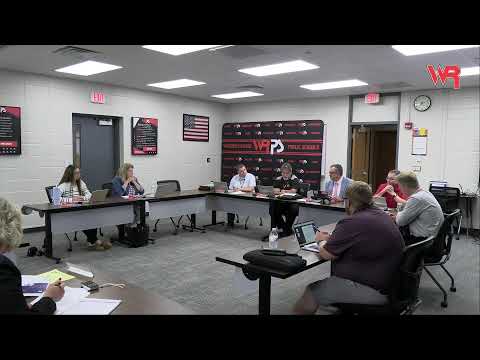
At the Sept. 8 Wisconsin Rapids School District board meeting, district officials and broker M3 reported medical-loss ratios well above 100% and proposed plan design changes, a clinic partnership with Innovia opening Nov. 3 and an HSA incentive tied to clinic use to reduce future renewals.
At its Sept. 8 meeting, Wisconsin Rapids School District administrators presented board members with options to rein in rising health-insurance costs, including a direct primary-care arrangement with Innovia, new copays for emergency and urgent care, a proposed $125-per-month spousal surcharge and an incentive tying part of employer HSA contributions to in-person visits at the Innovia clinic.
The district’s broker, Jen Corte of M3, told trustees the plan’s rolling medical-loss ratios were concentrated above 100 percent: 117% for July 2023–June 2024 and 119% for July 2024–June 2025, a combined 118% across the two-year window. Corte said Aspirus Health Plan paid out about 18% more in claims than it collected in premium dollars during the most recent period and that shortfalls were driven in part by prescription drug costs she estimated at roughly $2 million–$2.5 million for the year.
Those figures, Corte said, produced a modeled renewal that would otherwise be “uncapped” for 2026; last year the district negotiated a not-to-exceed (NTE) increase capped at 9.5% for the “signature” network but the carrier is not offering an NTE for 2027. To reduce utilization and make the plan more marketable, the district is opening a direct primary-care clinic with Innovia and proposing changes to plan design and incentives.
Why it matters: the district’s fully insured premiums must cover claims to keep renewal increases manageable. With claims outpacing premiums, administrators said the district risks larger increases unless utilization changes or plan contributions change.
Key proposals and projected effects
- Innovia clinic: The district plans to open an Innovia clinic (2811 Eighth Street, Suite 2) on or about Nov. 3. Corte said Innovia will allow employees to use other Innovia locations at no charge to the district during October; labs and imaging would still be billed. Administrators proposed using clinic visits to encourage primary-care use instead of higher-cost urgent-care and emergency-room visits.
- HSA incentive tied to clinic use: Administrators proposed keeping the usual January HSA deposit but making the second half of the employer HSA contribution (the September deposit) contingent on an in-person Innovia visit for the employee and, optionally, the spouse. For the initial year, employees would have until July 31 to complete the visit to qualify for the September deposit. The district described a family-level HSA contribution of $1,000 (with a proposed split of about two-thirds to the employee, one-third to the spouse) and $750 for single plans under discussion; final amounts will be brought back for approval.
- Plan design adjustments: To lower utilization and premium pressure, staff proposed adding an emergency-room copay of $250 after the deductible and a $75 urgent-care copay after the deductible (Corte said copays typically are waived if an ER visit results in hospital admission but said she would confirm specific carveouts). Corte said those changes would reduce the modeled signature-plan renewal to roughly 8.63% gross (from about 9.5%) and the freedom plan renewal to about 13.72% (from about 14.5%) in the district’s modeling.
- Spousal surcharge: District staff presented a possible $125-per-month spousal surcharge that would apply when a spouse is eligible for other employer-sponsored coverage but elects to remain on the district plan; the surcharge would not apply to government coverage (Medicare, VA) or Marketplace plans. Administrators said sensitivity testing showed spouses tend to add disproportionate claim costs and the surcharge is intended to limit employer exposure.
Costs and enrollment data cited
Corte presented enrollment and cost figures the district used for modeling: July 2024–June 2025 annualized premiums of about $12.7 million and claims near $14.8 million for the same period; a 2025 projected spend figure of about $14.02 million that reset to roughly $12.3 million after enrollment shifts from the higher-cost “freedom” plan into the “signature” plan. The district’s modeled 2026 employer contribution with the proposed plan changes was about $13.26 million (employer portion plus HSA contributions). Corte said the district’s signature plan features a $2,000 individual/$4,000 family deductible and that the freedom plan carries larger deductibles ($3,000/$6,000).
Board discussion and next steps
Board members asked about prior denials for out-of-network needs and any appeals; Corte and Superintendent Ron Rasmussen said staff had worked with Aspirus and district representatives to secure approvals when clinicians or specialties were not in-network. Trustees asked how employee feedback would be gathered; Rasmussen said administration will present details at staff meetings (an all‑staff Zoom and an Innovia kickoff were scheduled) and planned a formal recommendation to the board next month. No formal vote on plan design or incentives occurred Sept. 8; staff said they would return with a recommendation for board action in October.
Quotations
“We are not going to charge you for your members in October, but they can use any of our other facilities,” Jen Corte said of Innovia’s offer to allow district members to use other Innovia locations at no cost to the district during the clinic’s pre‑opening period.
“We need to begin controlling costs and I don’t know of any other way to do that along the way,” Superintendent Ron Rasmussen said, describing the district’s rationale for the clinic and related changes.
Speakers
- Jen Corte, insurance broker, M3 (business) - Ron Rasmussen, superintendent (government) - Brian Oswald, director of human resources (government) - Board member (unnamed)
Authorities
- Every Student Succeeds Act (ESSA) — referenced by staff in other updates during the meeting but not as a legal requirement for the health plan.
Discussion vs. decision
- Discussion: The board received data and proposed plan changes; administrators sought input and signaled a formal recommendation next month. - Direction: Staff will finalize plan option(s), continue negotiating with carriers and Innovia, and bring a formal recommendation to the board at a future meeting.
Provenance
topicintro: {"block_id":"block_2261.4","local_start":0,"local_end":562,"evidence_excerpt":"So, Jen Corte is back from M3 who acts as our insurance broker. With, last month we discussed direct primary care clinic and the contract with Anovia which we are moving forward on. There'll be a staff presentation on the 20 fourth at 04:00 for all staff, on Enovia. But we wanted also to provide you an update on the health insurance renewal as we looked at budget and the impact obviously health insurance and that benefit has. We thought we'd really keep everybody private the information to everyone about somewhat what we're seeing on the health insurance side."}
topfinish: {"block_id":"block_4633.94","local_start":0,"local_end":240,"evidence_excerpt":"I think the key with this is driving down appropriate utilization. We all want insurance for the things that we need it for for those catastrophic events, emergency things. It's the everyday urgent care things that can be handled at a higher quality and a lower cost for a unavoidable emergent room where a strep throat or an infection can be treated virtually or after school hours versus being forced to emergent or urgent. You know, we just want the appropriate care, high quality at the right price is what we're looking for when we say that we're trying to drive utilization."}