Get Full Government Meeting Transcripts, Videos, & Alerts Forever!
Get email alerts on the Veterans Empowerment Act topic
No spam. Unsubscribe anytime.
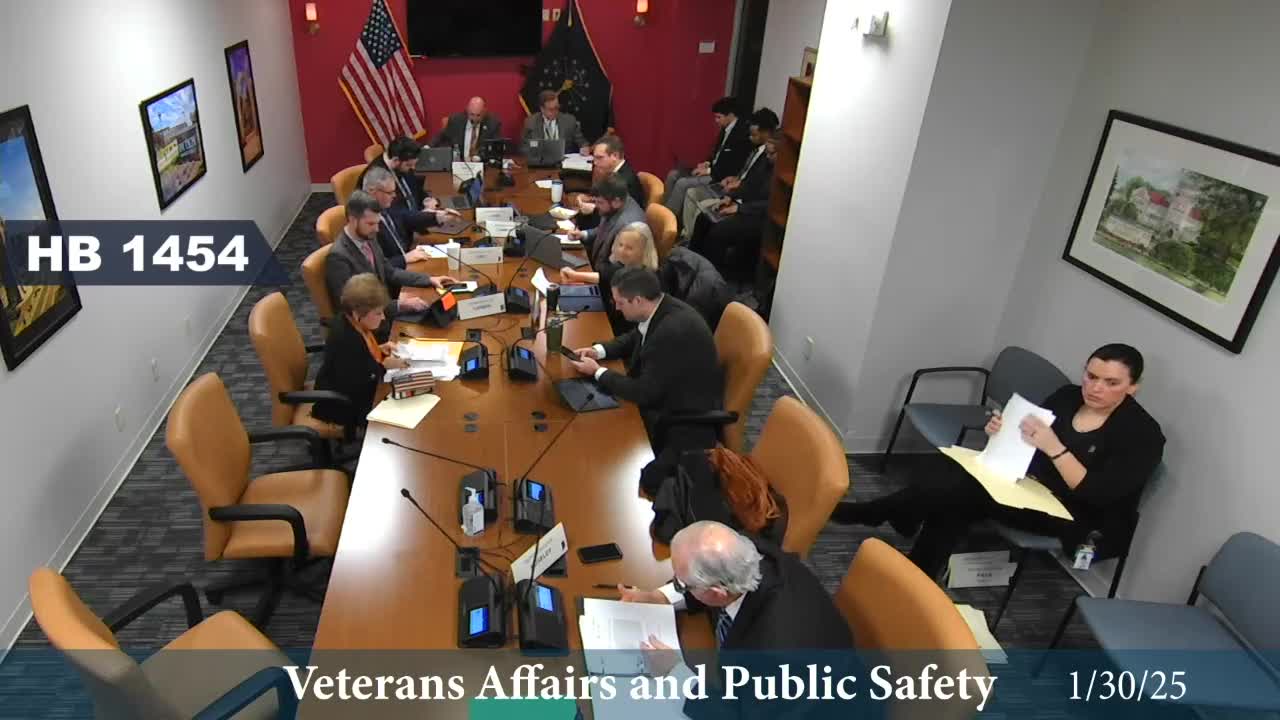
Committee advances Veterans Empowerment Act to limit fees charged to veterans for VA claim services
Summary
Legislation to regulate companies that charge veterans for help filing VA disability claims advanced out of committee after broad testimony supporting guardrails on fees, required disclosures and criminal/deceptive-act remedies.
The House committee on Monday advanced the Veterans Empowerment Act, a bill intended to regulate private entities that assist veterans with Department of Veterans Affairs disability claims and to cap the fees they may collect for successful claims.
Representative Chris Judy, the bill’s sponsor, told the committee the legislation creates guardrails for firms that assist veterans in filing or reopening VA disability claims. The bill would require written fee agreements, prohibit charging more than five times the monthly increase awarded to a veteran (or up to a $12,000 cap as stated in committee discussion), and prohibit charging fees unless the veteran is awarded an increase or new benefit. The sponsor also said the bill would require advisors to disclose free veteran service officer (VSO) options and to perform background checks for any employee who would access veterans’ medical or financial information. The bill would make violations subject to the state deceptive-acts enforcement provisions referenced in testimony.
Witnesses representing veterans organizations, service organizations and regulated businesses expressed support. Jim Byerly of the Military Veterans Coalition of Indiana and speakers from the VFW, DAV and American Legion urged passage. Peter O’Rourke, who said he represents trade associations of companies seeking regulation, and Mark Christiansen, chief of staff at a veteran-owned firm that charges contingent fees, testified that ethical private providers welcome regulation so bad actors are removed from the market. Several witnesses said the federal PACT Act and recent increases in claims volume have generated large retroactive payments to veterans; those retroactive payments can create big one-time sums that historically have resulted in large contingency payments to agents or attorneys.
Multiple witnesses described personal or constituent harms. Former VA staff and appeals supervisors testified that contingency payments to attorneys and agents have in some cases been very large because of retroactive payments; one witness described reviewing retroactive payments of tens of thousands of dollars that were then paid to representatives. Others described cases where elderly veterans paid upfront fees to firms that did not complete the work.
The bill drew broad support from veterans service organizations and from several private providers who said they already disclose free VSO options and use contingency models limited to five times the monthly increase. Testimony included specific proposals: a requirement that agents give veterans a written notice that free services exist and that the veteran may obtain a copy of free local service organizations; criminal or civil penalties for deceptive practice; rules limiting use of international call centers and prohibiting agents from using veterans’ personal logins.
Representative Judy and multiple witnesses framed the bill as protecting veterans while preserving the right to hire representation. The committee voted to advance the bill; the transcript records the committee summary as “Bill passes 10 to 0.”
Ending: The committee record shows strong stakeholder consensus for guardrails and statutory requirements on disclosures, background checks and fee limits; the transcript does not contain final bill text or precise statutory citation for the state deceptive-acts enforcement remedy referenced in testimony.