Get Full Government Meeting Transcripts, Videos, & Alerts Forever!
Get email alerts on the Sros Reserve Officers Training Jurisdiction topic
No spam. Unsubscribe anytime.
Panel approves amended bill to restrict off-duty police powers for some reserve officers and SROs
Summary
The committee passed an amended public-safety bill that restricts off-duty police powers for special deputies, reserve officers and some school resource officers unless they have full Tier 1/Tier 2 certification or written interagency agreements; the measure also clarifies Marion County training waivers.
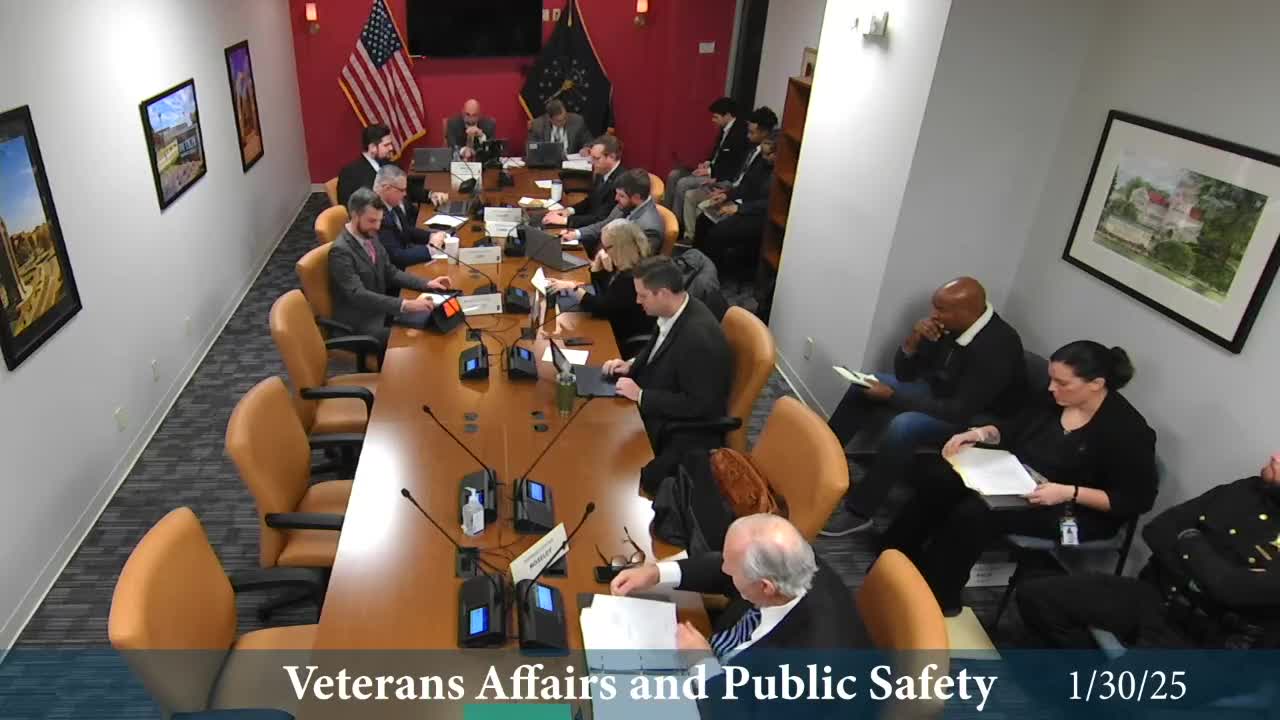
The Veterans Affairs and Public Safety Committee on Monday approved an amended bill that changes training and jurisdictional rules for school resource officers (SROs), special deputies and reserve officers.
Chairman Steve Bartels led discussion on Amendment No. 6, which, as described in committee, would prevent SROs, special deputies and reserve officers who have completed only a limited “pre-basic” program (a five-day pre-basic course) but have not completed full Tier 1 or Tier 2 basic training from exercising police powers outside their employing jurisdiction or from wearing police insignia while working off-duty in another jurisdiction. The amendment includes exceptions for actions necessary while traveling to or from duty, pursuits and felony arrests, transporting persons across jurisdictions, emergency dispatches, and when a formal memorandum of understanding authorizes cross-jurisdictional activity.
Bartels said the amendment also corrected language that inadvertently gave some SROs statewide jurisdiction; the amendment instead preserves statewide authority only where training and the specified limits permit it and excludes corporations as a jurisdictional catchall.
Representative Gore introduced Amendment No. 3 to address Marion County’s unique training structure. Gore said Marion County sheriff’s deputies who trained at the Marion County Sheriff’s Office Academy — an 800-hour academy whose instructors are ILEA-certified — are neither technically Tier 1 nor special deputies under current definitions. Amendment No. 3 would grant a statutory waiver for incumbent Marion County deputies trained under that academy and require new hires to attend ILEA (Tier 1) training on the same schedule as other agencies.
Committee members asked no substantive follow-ups; by consent the panel revoked an earlier Amendment No. 1. Committee discussion then covered other provisions moving correctional professionals and correctional officers into a “public safety officer” classification and several misdemeanor and felony enhancement provisions tied to aggressive driving and firearms. Bartels summarized those sections as unchanged by the amendments under consideration.
The committee moved the bill as amended, called the roll and reported the measure out of committee. The clerk’s summary in the transcript reads “Bill passes as amended 10.” No public testimony was recorded for the bill in the hearing segment contained in the transcript.
The Marion County waiver and the training transition rules are central implementation items: Deputy training hours, who qualifies as Tier 1, and how memoranda of understanding will be used for cross-jurisdiction policing will determine how agencies implement the new limits. Representative Gore said the Marion County academy trains to a higher hour count than the current Tier 1 minimum and includes ILEA-certified instructors.
The bill will proceed to the next stage of consideration. The transcript does not include the full statutory text of the waiver or the exact amendment language; those details will determine operational implementation and enforcement.
Votes at a glance: committee reported the measure advanced as “Bill passes as amended 10.” The transcript does not include a complete numeric roll-call tally in machine-readable form.
Ending: Key implementation questions for counties and sheriff’s offices include how the Marion County waiver will be administered, what timeline new hires will have to satisfy Tier 1 requirements, and how interagency MOUs will be structured to permit cross-jurisdiction activity.