Get Full Government Meeting Transcripts, Videos, & Alerts Forever!
Get email alerts on the Thermal Energy Networks topic
No spam. Unsubscribe anytime.
Duluth energy commission urges plan to shift comfort systems off natural gas
Summary
The Duluth Energy Plan Commission recommended that the city create a funded staff position or task force and secure planning funds to transition Comfort Systems from natural gas to low‑carbon thermal networks such as geothermal, citing lagging reductions in community natural‑gas emissions and multi‑million‑dollar project costs.
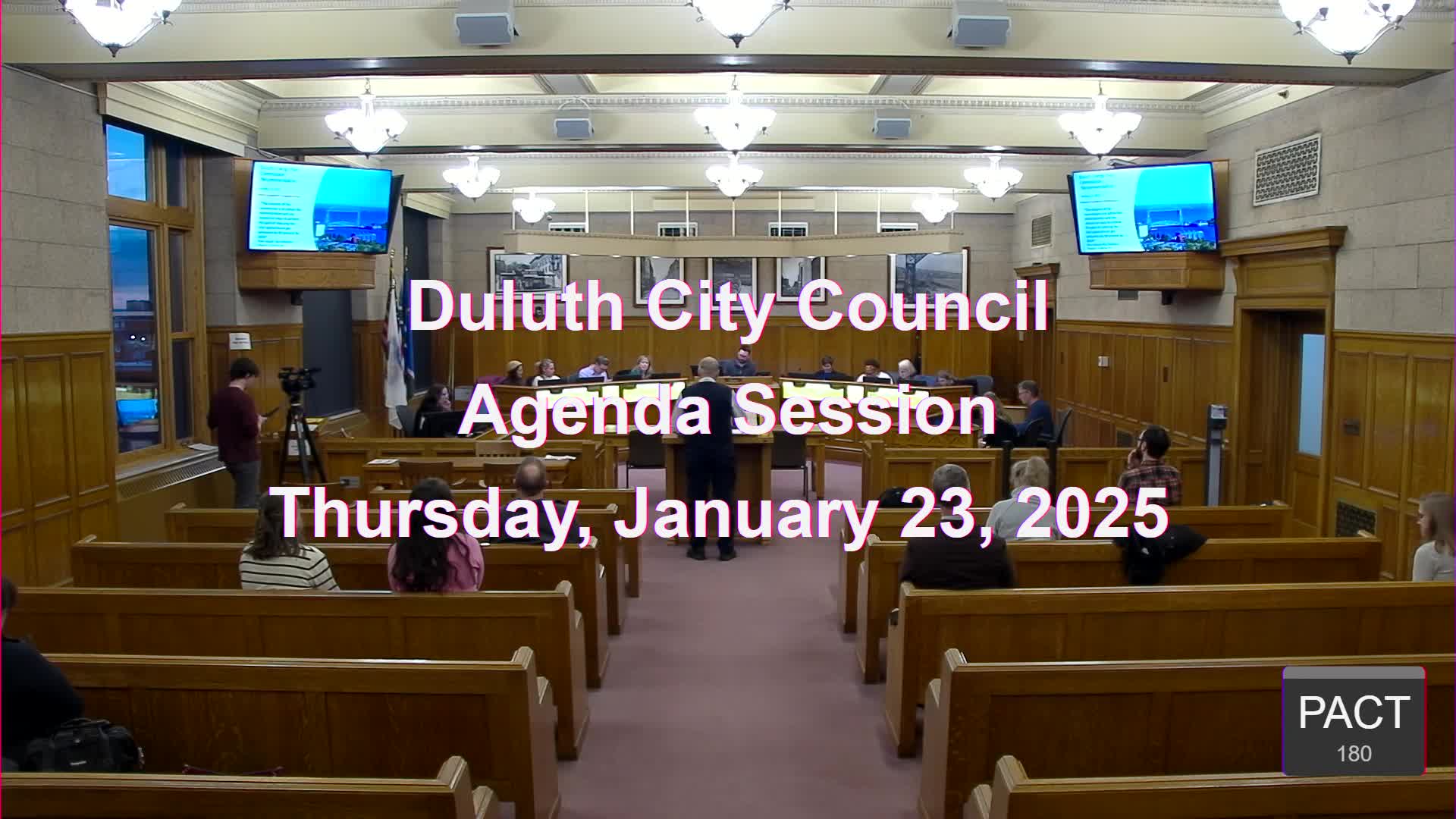
The Duluth Energy Plan Commission urged the Duluth City Council during a council meeting to begin formal planning and secure funding to transition the city’s Comfort Systems away from natural gas toward geothermal and other thermal energy networks, and to create either a city position or a task force to carry out that work.
The recommendation matters because, the commission said, citywide greenhouse‑gas reductions have stalled in recent years and the natural‑gas sector has become a larger share of community emissions. "For the corporate city, we have made significant progress ... being at 63% greenhouse gas reduction from in 2023 from a 2008 baseline," commission chair Gary Olson said. He told councilors the community as a whole had achieved about a 40% reduction between 2013 and 2020, but that electricity sector gains (about 63% reduction) were offset by much smaller reductions in the natural‑gas sector (about 13% reduction), and that the natural‑gas share rose to roughly 41% of community emissions by 2020.
"We need to act now to start transitioning comfort systems to a more sustainable model for their own longevity and the benefit of their customers," Olson said, summarizing the commission's two primary recommendations: (1) create a position or task force focused on developing a plan for Comfort Systems to meet the city's greenhouse‑gas goals, and (2) provide secure funding to support energy transition planning for Comfort Systems.
Commissioners and staff presented thermal energy networks (also described as geothermal energy networks or district thermal systems) as a technology that can provide both heating and cooling, be resilient and local, and produce multiple units of thermal energy per unit of input. The presentation included an example of a neighborhood shared geothermal network and referenced a local demonstration at the University of Minnesota Duluth's Bagley Outdoor Classroom.
Councilors asked several practical questions about cost, phasing and who would do the work. Olson and Duluth sustainability officer Mindy Granley said the city lacks capacity to complete large projects without outside funding and staff support. Granley said the city has used external grants to obtain design work and feasibility information; she described a project that would capture waste heat from the Western Lake Superior Sanitary District (WLSSD) and route it into an existing thermal network that is at "30% design and an estimate. We need $55,000,000 to get it done." Granley added that the team had pursued Department of Energy funding for that project but had not been awarded the larger federal grant.
The commission and staff also discussed other published examples and pilots, including a Framingham, Massachusetts, pilot by Eversource Energy and decarbonization efforts by utilities such as Vermont Gas Systems and filings to the Minnesota Public Utilities Commission under the Minnesota Natural Gas and Innovation Act (name used in the presentation). Olson and Granley noted that smaller pilot projects or phased connections (for example serving a few buildings or a specific corridor) could reduce upfront costs compared with citywide construction.
Councilors suggested both volunteer and staffed approaches. Some councilors said a volunteer task force with members who have grant, lobbying or utility experience could help develop funding proposals; Granley said grant funding sometimes provides consulting dollars (she referenced up to about $110,000 in consulting funds in an anticipated energy‑futures grant) but that permanent staff would likely be needed for sustained program work. Olson warned about "stranded assets" if the city continues to extend natural‑gas infrastructure where future heating could be electrified or served by thermal networks.
No formal council action or vote was recorded during the presentation. The council took questions and discussion but did not adopt a task force or allocate funding at that meeting. The presentation concluded and the council moved on to its agenda session.