Get Full Government Meeting Transcripts, Videos, & Alerts Forever!
Get email alerts on the Child Protection Reporting topic
No spam. Unsubscribe anytime.
Panel hears bill to speed and expand public reporting of child fatalities and near‑fatalities
Summary
Lawmakers heard testimony for House Bill 1152, which would require faster public summaries of child fatalities and add more details about perpetrators and prior case history; an amendment tightening definitions and protecting confidentiality was adopted by committee consent and the bill was held for further consideration.
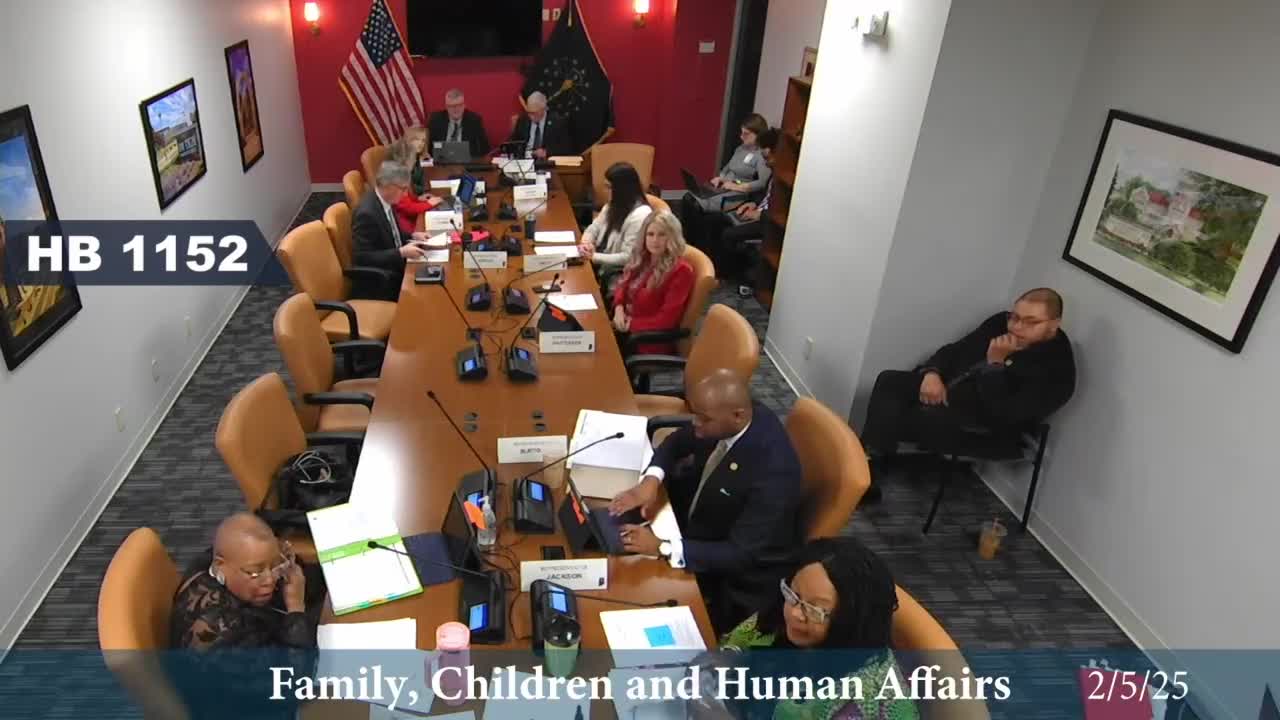
Representative Ryan Lauer, author of House Bill 1152, told the House Family, Children and Human Affairs Committee the bill would change how Indiana reports child fatalities and near‑fatalities to provide more timely and detailed information to communities.
"This bill improves the reporting of child fatalities and near fatalities in our state, bringing more timely information to our communities and additional details of the circumstances when these tragedies occur," Representative Lauer said.
The bill would publish an initial short summary after a death attributed to abuse or neglect and a more detailed synopsis after 90 days, then include the information in the existing annual report. Lauer said the measure would add already public details about perpetrators when an arrest is made and include past case history involving the child or the perpetrator.
The proposal was described by witnesses as a transparency measure that could help policymakers and the public understand patterns and prevent future tragedies. "When we have more knowledge, we have more solutions," Emilia McClure, executive director of the Hoosier State Press Association, told the committee. McClure said reporters aim to "fully report on the circumstances" and would also report subsequent outcomes, such as acquittals or findings that abuse was unsubstantiated.
Braylon Yerington, founder of Champions for Children and an adoptive parent, gave multiple examples of near‑fatal incidents he said currently are not visible in Indiana's public reporting, including a child who died of uncontrolled diabetes after years of hotline reports and other cases involving shootings, severe burns and near‑fatal neglect. "The deaths or near deaths of Indiana children cannot be in vain. We owe them a full and robust review," Yerington said.
Representative Lauer said the bill aligns Indiana more closely with the federal Child Abuse Prevention and Treatment Act and with reporting practices in other states. He said he has worked with prosecutors, the Department of Child Services and public defenders on an amendment to tighten definitions and protect confidentiality for other victims and reporters.
Committee chairman Dale Devon said the committee would not vote on bills that day to allow time for members to review amendments; Lauer asked the committee to adopt Amendment #2, which a committee member approved by consent. The committee otherwise did not take a final vote on the bill and agreed to hold it for further consideration next week.
Why it matters: Committee discussion and witness testimony focused on whether more timely and specific public reporting would help communities and policymakers learn from fatal and near‑fatal child abuse cases. Supporters said greater transparency can inform prevention; witnesses and the bill author described safeguards to protect confidentiality and individual rights.
What happened next: Amendment #2 to HB 1152 was accepted by committee consent. The committee postponed a final vote on the bill to a later meeting to allow review of additional amendments and consultation with stakeholders.