Get Full Government Meeting Transcripts, Videos, & Alerts Forever!
Get email alerts on the Land Use Nonfarm Dwelling Appeal topic
No spam. Unsubscribe anytime.
Harney County Court declines to hear appeal of nonfarm dwelling permit, affirms planning commission
Summary
At a Jan. 21 special session, the Harney County Court voted 2-1 to decline an appeal filed by Mr. Inglis and to enter an order affirming the Harney County Planning Commission's approval of a conditional use permit allowing a nonfarm single-family dwelling on EFU land granted to the Gilmore application; the appellant may still appeal to LUBA.
Harney County Court on Jan. 21 voted 2-1 to decline an appeal of a conditional-use permit and to affirm the Harney County Planning Commission's prior approval of a nonfarm single-family dwelling on land zoned Exclusive Farm Use (EFU).
The appeal, filed by an objector identified in the record as Mr. Inglis, challenged the Gilmore petition and application for a nonfarm dwelling, arguing among other points that the portion of the parcel in question is not “generally unsuitable” for agricultural production and that approving the permit would set an undesirable precedent. The county court's majority concluded the existing record was sufficient to let the planning commission's decision stand.
The issue mattered because the permit allows a single-family dwelling and accessory buildings on an EFU parcel without changing the underlying EFU zoning. Opponents argued the specific portion of the parcel is suitable for farming and noted, according to documents in the appeal, that there are at least eight other small parcels in the study area that could be treated similarly if this decision were reversed.
Court discussion focused on the limited options available to the county court on appeal: decline to hear the matter and affirm the planning commission; accept the appeal and schedule a public hearing; or, if accepting the appeal, decide whether to adjudicate on the existing record, take new oral argument, hold a de novo hearing, or limit a hearing to specific issues.
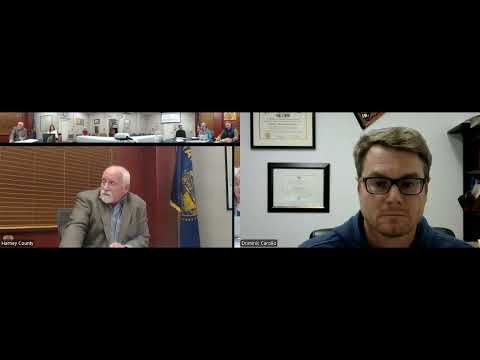
County counsel (staff member) Dominic told the court that declining to hear the matter would produce a final county decision and likely speed any Land Use Board of Appeals (LUBA) review, because it creates the county-level final order LUBA requires. “It would actually speed up their LUBA appeal because this would create a final decision by the county at the county level,” Dominic said during the discussion.
Planning Director McMullen provided the court with the materials assembled for the planning commission, including hearing recordings and a written record. The planning commission’s order, included in the record, contained findings the commission said were supported by evidence; commissioners on the county court repeatedly referenced that the planning commission heard live testimony and that its members routinely consider these matters.
One member of the county court expressed concern about precedent — that allowing a nonfarm dwelling on a small portion of an EFU parcel could lead to more such approvals in Harney County — and said several of the ordinance criteria appeared to be “adequately refuted” in the appeal. Others said they did not find the record lacking and noted that the planning commission had approved the application with one abstention.
After discussion, a motion was made and seconded to decline to hear the appeal and enter an order affirming the planning commission’s decision. The court voted in favor of the motion by voice vote; the clerk announced the motion carried, 2 to 1. The court asked staff to prepare the required written order for signature at the next county court session.
The appellant retains the right to appeal the county’s final decision to the Land Use Board of Appeals (LUBA). Court members and staff discussed that if LUBA remands the matter, the county court could preside over the remand or the planning commission could be asked to take further action depending on LUBA’s instructions and the county’s code; the transcript records that on remand the county court historically has been the body to decide the matter but that practice would depend on any directive from LUBA.
The special session opened with the court explaining its quasi-judicial role in reviewing factual findings and evidence and closed after the motion and administrative directions. No additional final actions on the application were taken at the meeting beyond affirming the planning commission’s decision.