Get Full Government Meeting Transcripts, Videos, & Alerts Forever!
Get email alerts on the Energy Efficiency topic
No spam. Unsubscribe anytime.
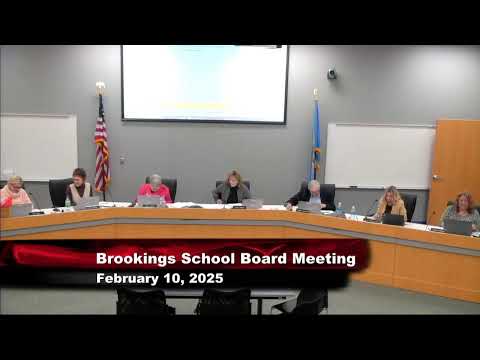
Brookings board approves consultant to seek energy rebates for new elementary projects
Summary
Board approved an agreement with Ivy Bay Valley Bailey to pursue a new set of energy rebates potentially worth an estimated $400,000; the firm's fee would be charged only if the district receives rebates.
The Brookings School District board approved a memorandum of understanding with consultant Ivy Bay Valley Bailey to investigate and pursue a newly available set of energy rebate programs for school projects.
Board member Stacy explained that the program — newly open to schools since 2023 — covers systems such as thermal storage tanks, chillers, cooling towers, plant piping and the associated controls. The firm will perform the application work at no upfront cost; if the district receives rebates the consultant’s fee would be billed as a percentage of the award.
Stacy said Ivy Bay’s early estimates put potential rebates “upwards of $400,000” for eligible work, and that the firm’s fee is roughly 10% of realized rebates (about $40,000 on a $400,000 award). She cautioned the process is complex and could take into fiscal year 2026 before any money is distributed.
The board discussed the practicalities of the contracting process and finance committee members said the consultant will work with district staff to gather technical data. Stacy said the firm will begin work if the board approves, that the company bills by time spent and that the district can stop the process with limited cost exposure if the opportunity proves ineligible.
The motion to enter the agreement passed. Board members noted that any net rebates would be applied to capital outlay or the project shortfall as directed by the district finance plan.