Get Full Government Meeting Transcripts, Videos, & Alerts Forever!
Get email alerts on the Budget Fy26 topic
No spam. Unsubscribe anytime.
South Kingstown school leaders ask town for $500,000 as part of FY26 budget shortfall
Summary
District budget presenters told the school committee the FY26 plan closes most gaps through cuts but still asks the town for $500,000 and a $309,830 shift of shared-service costs; remaining risk if the town declines could be covered from reserves but would cut fund balance to below typical levels.
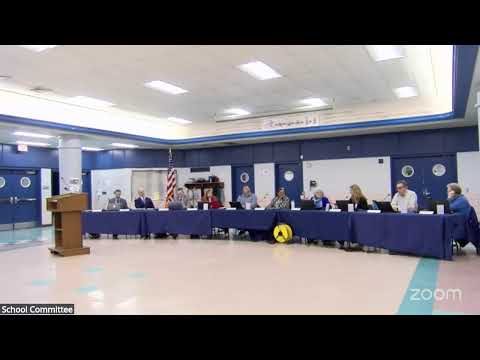
Ryan Kilpatrick, a staff member who presented the budget to the South Kingstown School Committee on March 11, said the district—s FY26 budget exercise started from the $2.4 million gap driven by lower projected state and federal revenue and higher expenses. "This presentation before you tonight is based on the original presentation and budget adoption from February 11," Kilpatrick said as he opened the joint FY26 review for the committee.
Kilpatrick and Superintendent Pedraza outlined steps the district took to narrow the gap: roughly $1.5 million in salary-and-benefit reductions (about 16.8 full-time equivalents), $75,000 trimmed from equipment, software and professional development, and other line-item savings. With those reductions the district still presented a remaining shortfall of about $809,000; its formal request to the town is for an additional $500,000 and a second request to shift $309,830 in shared-service expenses (school resource officers, crossing guards, field maintenance, 20% of an IT manager position and a portion of a tax/assessment software subscription) from the school budget to the town budget.
Nut graf: District staff said the combined package is aimed at preserving core educational programming while avoiding a structural deficit that would come from using reserves for recurring operating costs. Kilpatrick cautioned the committee that using fund balance to cover the gap would reduce reserves to near or below levels the district has historically maintained and would increase fiscal risk into future years.
The budget presentation emphasized several program impacts if the town does not provide the $500,000 and does not accept the proposed shared-services shift: larger class sizes as fewer FTEs remain, reduced curricular and building support, and the loss of centrally funded summer learning programs (elementary-to-middle summer academy and community wraparound camps previously paid with ESSER funds). Kilpatrick said the FY26 proposal preserves legally required services such as ESY (extended school year) and credit recovery at the high school but that other summer offerings will not be funded in the adoption presented.
Committee members pressed for clearer breakdowns of the shared-service allocations and the tax-software line item; several members called the current allocation of $31,679 for the town—s Vision appraisal software to the school budget "absurd" and asked the town to reallocate that cost. Committee members also discussed enrollment declines as a primary driver of budget pressure; presenters pointed to long-term in-district declines and growing out-of-district placements and charter/CTE enrollments as fiscal drivers.
Kilpatrick and others ran through fund-balance scenarios. The district reported a beginning FY26 fund balance of roughly $4.4 million and said it intends to use planned capital commitments and other existing approvals so the proposed FY26 operating budget does not rely on reserves. If the town withholds the requested $500,000 and the district covers the $809,000 gap from fund balance, presenters said the end-of-year fund balance would fall to approximately $993,068 (about 1%--2.9% of the adopted budget depending on exact totals), a level committee members described as "scary" and vulnerable to unexpected costs such as high-cost special-education placements, sudden enrollment outflow, or emergency facility repairs.
Several committee members urged a strong case to the Town Council ahead of the joint budget hearing scheduled March 13. "We're asking for 500,000 extra dollars this year," one member said, framing the request as an investment to maintain programs and the quality of the local public schools rather than as an add-on. Others warned that repeated reliance on reserves to close recurring gaps would create a worsening structural shortfall.
The presentation and discussion ran through portfolio-level detail (general fund, restricted/federal grants, capital fund, and the school lunch enterprise fund) and concluded with an appeal that the committee support the adopted FY26 budget package when the district presents it to the Town Council.
Ending: Committee members thanked staff for the detailed work and said they would take the message into the joint hearing with the Town Council. The presentation left open follow-up items the committee requested, including a clearer dollar-by-dollar depiction of how charter and CTE tuition flows affect the operating budget and a refined breakdown of shared-service allocations.