Get Full Government Meeting Transcripts, Videos, & Alerts Forever!
Get email alerts on the M23 Offensive East Drc topic
No spam. Unsubscribe anytime.
UN briefing says M23 advance in eastern DRC threatens regional stability, urges cease-fire and humanitarian access
Summary
In a Security Council briefing, the United Nations warned that the M23 advance in North and South Kivu, including the taking of Goma, has worsened humanitarian and human-rights conditions, hampered MONUSCO operations, and prompted calls for urgent regional and international action.
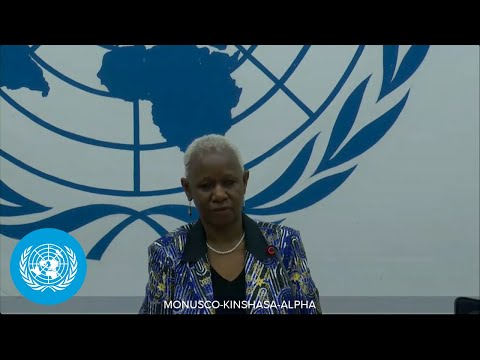
Bento Keita, a United Nations briefing official, told the Security Council on Feb. 16 that the M23 armed group, which she said has received support from Rwandan forces, has continued offensive operations in North Kivu and South Kivu that threaten peace and stability in the Great Lakes region.
"This crisis represents a clear threat to the peace and stability of the Great Lakes Region," Keita said, describing recent territorial gains by M23 and the establishment of a parallel administration in Goma with the designation of a governor and a mayor.
Keita said the M23 seized control of Kavumu Airport and the provincial capital Bukavu on Feb. 16 and later took a town the briefing named "Camanyola," at an intersection of borders between the Democratic Republic of the Congo, Rwanda and Burundi. She said the group has imposed severe restrictions on MONUSCO's freedom of movement, blocked resupply of water and other vital goods to United Nations and partner personnel, and controls the roads entering and leaving areas under its control.
Those access and movement constraints, Keita said, are complicating rotations and other operations essential to MONUSCO's mandate, whose priority is protection of civilians. Keita warned that MONUSCO facilities in Goma and elsewhere are sheltering people who sought the mission's protection but that the facilities were not designed or equipped for long-term sheltering. "Health and hygiene conditions are rapidly deteriorating," she said, increasing risks to both those sheltering and mission personnel and feeding disinformation and anti‑MONUSCO sentiment.
The briefing documented broad humanitarian and human-rights concerns. Keita said MONUSCO has recorded armed searches of hospitals and homes, cases of forced recruitment and daily requests for individual protection addressed to the UN joint human-rights office, including from human-rights defenders facing threats or risks of reprisals. She warned that the offensive has increased the vulnerability of women and girls to conflict‑related sexual violence and said security and logistical constraints are hampering verification and response.
Keita welcomed outcomes from recent regional meetings, saying she "welcome[d] the conclusions" of an East African Community and Southern African Development Community joint summit on Feb. 8 that called for an immediate ceasefire, resumption of direct negotiations with all state and non‑state parties, and restoration of essential services. She urged military staff of EAC and SADC countries to coordinate on modalities for implementing the ceasefire and other urgent measures, and said reopening Goma Airport and Kavumu Airport is essential to alleviate civilian suffering.
The briefing also noted international accountability measures. Keita welcomed adoption on Feb. 7 by the Human Rights Council of a resolution establishing a fact‑finding mission and an independent commission of inquiry to investigate alleged violations of human rights and international humanitarian law in eastern DRC. She called on the Security Council to take "urgent and decisive steps to avert a wider regional war" and to hold perpetrators of violations accountable.
Keita underscored recent African Union engagement, congratulated President João Lourenço of Angola on his appointment as African Union chair and mediator in the Rwanda process, and urged that progress achieved in recent months not be lost. She repeatedly framed the situation as one that risks engulfing the region and said the United Nations, including MONUSCO, remains determined to support efforts to bring parties to the negotiating table.
The briefing included several operational and humanitarian details but also used place names and terms that could not be independently verified in the transcript. Keita said humanitarian actors are resuming activities in Bukavu and that large numbers of displaced people have arrived in recent weeks; the briefing referenced more than 100,000 displaced people arriving in January in a location named in the transcript that could not be verified. Keita said roughly 200 displaced people were staying with host families in another locality named in the briefing. The transcript's place names for those two locations were unclear and are reported here as given in the briefing.