Get Full Government Meeting Transcripts, Videos, & Alerts Forever!
Get email alerts on the Medicaid Budget Fiscal Risk topic
No spam. Unsubscribe anytime.
DC officials warn of steep Medicaid funding shortfall as federal match proposals loom
Summary
Deputy Mayor Wayne Turnich told the Council—s Committee on Health that rising enrollment and provider costs could create a $173.2 million local funding gap for fiscal 2026; proposals in Congress to reduce Medicaid matching rates could worsen the district—s position by more than $1 billion in lost federal funds.
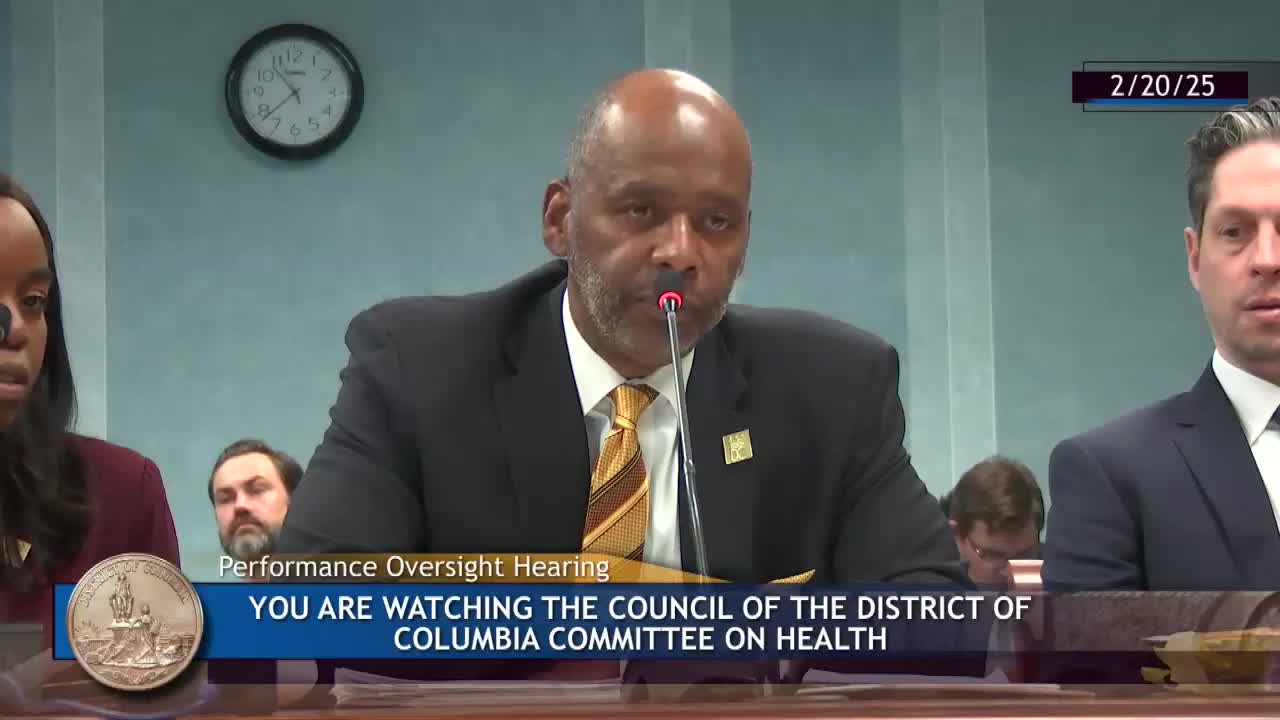
Deputy Mayor Wayne Turnich warned the D.C. Council—s Committee on Health on Feb. 20 that the District faces a sizable funding gap for its Medicaid and Alliance programs in fiscal 2026 unless program design or local funding changes are implemented.
Turnich told Chair Christina Henderson the immediate projection, holding eligibility and benefits constant, would require the city to find an additional $173,200,000 in local funds to pay for the same level of services and enrollment in FY26. "If we don't make any changes to the district's Medicaid program design, the city will need to allocate a hundred and $73,200,000 in additional local funds to pay for the program in fiscal year 26," Turnich said during his presentation.
The deputy mayor said that increase is driven principally by enrollment growth and provider rate increases. He emphasized that if the city declined to fund that local increase, trimming Medicaid would have a much larger effect on total program spending because local reductions also forfeit federal matching dollars. "If they don't fund this increase and take it out of the Medicaid program, it would have a total funds effect of about 600 close to $600,000,000," Turnich said.
Members of the committee and Turnich also discussed a separate, larger risk: proposals circulating in the U.S. House would reduce the federal Medicaid matching rate (FMAP) for the District and other jurisdictions. Turnich summarized options under consideration on the Hill that would cut special D.C. FMAP treatment and sharply lower match rates for Medicaid expansion and legacy coverage. He said one House proposal could equalize or cap match rates and cited possible cuts that would reduce D.C.—s federal Medicaid funding by roughly $1.1 billion in a hypothetical scenario.
"They would reduce from 70% to 50% the federal match for the district's legacy program ... and they would ... reduce the amount the federal government would pay from 90% to 50%" for the expansion population, Turnich said. He told the committee federal changes of that magnitude would require "draconian cuts" to eligibility, benefits, or provider rates unless the city received new revenues.
Council members pressed Turnich for scenarios and follow-up. Councilmember Zachary Parker asked whether the executive had contingency scenarios for different policy choices; Turnich said workbooks and models are being prepared with the Office of Budget and Planning but declined to release deliberative options before the mayor—s budget is transmitted.
Turnich said the administration is engaged in outreach to health-care associations and stakeholder groups and is briefing Hill staff about the potential local impact of proposed federal changes. "When people see the numbers, they're like, 'oh my god,' and they are fully aware of the damage this will do," he said of conversations with external partners.
Why it matters: Medicaid is the District—s largest health-care program and a major share of the city—s budget. Changes to eligibility, benefits, or provider reimbursement could affect access to care for hundreds of thousands of residents and touch hospitals, long-term care providers and community clinics.
What—s next: Turnich urged the council to watch the federal process closely and signaled the administration will integrate possible Medicaid adjustments into the FY26 budget development process if additional local resources are not secured. He described options as politically and technically difficult and said any major program redesign would require careful planning to avoid unintended harm.