Get Full Government Meeting Transcripts, Videos, & Alerts Forever!
Get email alerts on the School Ethics topic
No spam. Unsubscribe anytime.
Princeton board receives annual School Ethics Act briefing on limits, recusal and social media
Summary
An outside attorney briefed the Princeton Board of Education on the School Ethics Act, covering board duties, confidentiality, conflicts of interest, recusal rules and recent commission decisions.
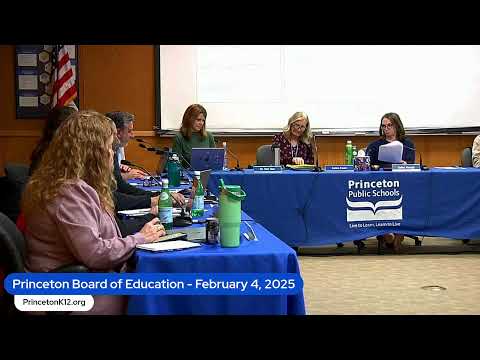
Mr. Lapura, an attorney from Freudian Harrah, delivered the Princeton Board of Education’s annual training on the School Ethics Act, reviewing board members’ duties, confidentiality obligations and recent advisory opinions and commission decisions.
Lapura told the board that members’ powers come from state law and the New Jersey State Board of Education’s rules, and emphasized that board action should be limited to policy-making, planning and appraisal rather than day-to-day administration. “You don’t run the school district — you act on recommendations of the superintendent,” he said.
He reviewed key ethical limits: preserving confidentiality for executive-session matters and personnel issues, avoiding private actions that could compromise the board, not using official position for unwarranted personal advantage, and recusing from negotiations or votes when relatives are affected. Lapura said advisory opinions and School Ethics Commission decisions in the past year reinforced those rules.
The training covered several recent commission findings: a board member who campaigned in an official-looking video was censured for using her office to endorse candidates; a volunteer coach who was later appointed to a board seat was found in violation but received no penalty because of the specific facts; and a board member who delivered a staff member’s letter to other board members while excluding the superintendent was suspended for 60 days after the commission found she had represented the employee against the district.
Lapura walked members through examples where participation in contract negotiations or personnel-related discussions creates conflicts — for instance, when a board member’s relative is employed in the district or the board member has an ongoing professional relationship with district personnel.
He also cautioned about social media and private statements: a disclaimer saying “this is my personal view” does not override requirements to protect confidential information or to avoid defamatory statements, and it may not prevent an ethics complaint if the content violates the School Ethics Act.
Board members asked clarifying questions during and after the presentation. Lapura said advisory opinions are available and that boards often consult counsel when situations are ambiguous. He encouraged members to contact him or the district attorney for specific questions about recusal and conflicts.
The training concluded with guidance on when board members must refer constituent complaints to the superintendent, and a reminder that violations of the School Ethics Act can result in public reprimand, censure, suspension or removal depending on the offense.
The presentation was provided to the board and will be shared electronically on request, the chair said.