Get Full Government Meeting Transcripts, Videos, & Alerts Forever!
Get email alerts on the Affordable Housing Funding topic
No spam. Unsubscribe anytime.
Committee holds public hearing on bill to transfer Gura 500 lot‑sale fund to Guam housing authority
Summary
The Committee on Municipal Affairs, Tourism, Housing, Hagania Restoration and Redevelopment Authority heard public testimony on Bill 327‑32 to transfer custodianship of the Gura 500 lot‑sale fund from the Department of Administration to the Guam Housing and Urban Renewal Authority (GURA).
The Committee on Municipal Affairs, Tourism, Housing, Hagania Restoration and Redevelopment Authority heard public testimony on Bill 327‑32 to transfer custodianship of the Gura 500 lot‑sale fund from the Department of Administration to the Guam Housing and Urban Renewal Authority (GURA).
Mister Sablan, chair of GURA's Board of Commissioners, told the committee the board supports the bill and that nonfederal funds such as the Gura 500 proceeds will “afford Gura the needed flexibility to address its programmatic and operational needs.” He said the authority has helped develop Guam's affordable housing inventory for more than five decades and faces a current challenge of sustaining an aging stock.
Michael Duenas, executive director of the Guam Housing and Urban Renewal Authority, said custodianship to GURA is “fundamentally logical,” noting GURA has administered the 500‑lot affordable homeownership program for 35 years. Duenas gave program figures: 89 of the original 500 leases remain outstanding; GURA has advanced an estimated $23,000,000 in assistance and collected about $24,000,000 in revenue; and the Gura 500 lot fund balance stood at $1,040,000 as of March 31, 2014.
Martin Beneventi, president of the Guam Housing Corporation and executive officer of the Affordable Housing Coordinating Council, said his organizations support Bill 327‑32 and highlighted pilot work on alternative building systems and model homes. Beneventi said alternatives could cut housing costs substantially and help meet a local target to add 3,000 affordable homes.
Speakers described programmatic priorities the fund could support if transferred to GURA, including rehabilitation of older rental units, improvements for seniors in specific communities, and studies to assess long‑term fiscal needs for the housing stock. Duenas said the authority has commissioned physical‑needs and fiscal assessments to plan rehabilitation and sustain viability.
The hearing record also included operational details GURA provided: the authority completed an insurance‑asset review that reduced annual premium costs by about $162,000 after a one‑time $35,000 consulting expense; audit work from fiscal 2013 identified reporting and administrative practices the agency is addressing; and GURA currently serves between about 150 and 200 Section 8 applicants per year while roughly 2,500 people remain on the waiting list.
In discussion, GURA representatives described a proposed lottery approach for voucher selection intended to select 200–300 beneficiaries per year rather than maintaining a single long wait list. They said the change aims to set clearer expectations for applicants and make staff workloads more manageable.
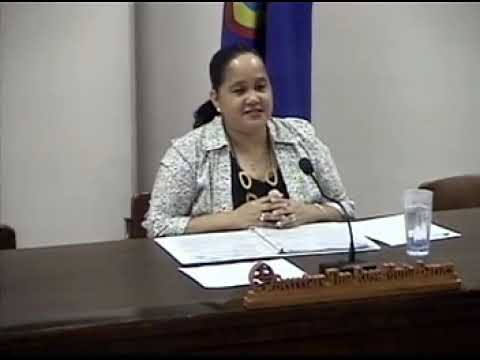
Chairwoman Tina Barnes closed the hearing and said members of the public may submit written testimony to her office. She said she would seek to place the bill on a future committee agenda before budget hearings; the committee did not vote on the measure at the public hearing.
The committee record shows the public hearing opened and was concluded with no formal committee vote recorded at that session.