Get Full Government Meeting Transcripts, Videos, & Alerts Forever!
Get email alerts on the Special Education topic
No spam. Unsubscribe anytime.
Kyrene officials say long‑range plan aims to limit disruptions for special‑needs programs while warning of domino effects
Summary
President Kevin Walsh opened a non‑action study session Oct. 28 to allow board members to ask clarifying questions about the district's long‑range planning process.
President Kevin Walsh opened a non‑action study session Oct. 28 to allow board members to ask clarifying questions about the district's long‑range planning process. "This study session is purely meant to provide an opportunity for board members to ask questions of district leadership," Walsh said, adding the board would not take action until December.
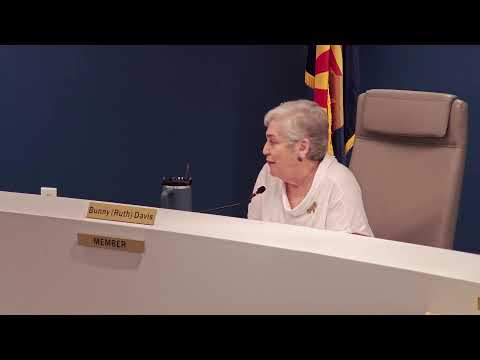
Board member Bunny Davis asked how students with special needs would be considered under consolidation proposals and how families would be informed. "There seems to be a great deal of concern about what happens with our special needs kids," Davis said.
Superintendent Tenes and Dr. Lane said staff are reviewing program capacity at each site, analyzing boundary options and seeking to keep moves to a minimum. "We have been looking at capacity for programs at each of those individual sites that are open," Dr. Lane said. She said district planners seek to place programs so students are closer to their home schools and so that the least number of moves are required.
District staff said about 17 of the district's 25 elementary campuses host some form of special‑education program (cross‑categorical, behavioral/sensory or developmental programs). Dr. Lane told the board the district has about 186 students in the CCD program alone and that any consolidation scenario will touch some special‑education services: "I believe there would be an impact in some way to some special ed program."
Staff emphasized the planning complexity. If the board alters the plan before a December vote, Dr. Lane said, it could create a chain of program and boundary changes that would affect many schools. For that reason, staff plan to withhold detailed, campus‑level placement notices until after the board votes, but said a district communication to families was expected in the coming days.
District leaders also said they are weighing transportation impacts: reducing some students' time on buses (currently in some cases "45 minutes or an hour") may require larger moves that are disruptive in other ways. The district said it will try to balance competing priorities: minimizing moves, reducing travel time and spreading specialized programs so no single campus is overburdened with additional responsibilities.
The study session did not include any motions or votes related to consolidation and staff reiterated that detailed placements will follow the board's December decision.
Ending: The district said it will be prepared to communicate placements promptly after the board's December action and to revise plans quickly if the board makes changes then.