Get Full Government Meeting Transcripts, Videos, & Alerts Forever!
Get email alerts on the Education Achievement Readiness topic
No spam. Unsubscribe anytime.
South St. Paul district outlines targets to boost readiness, close gaps and expand digital citizenship
Summary
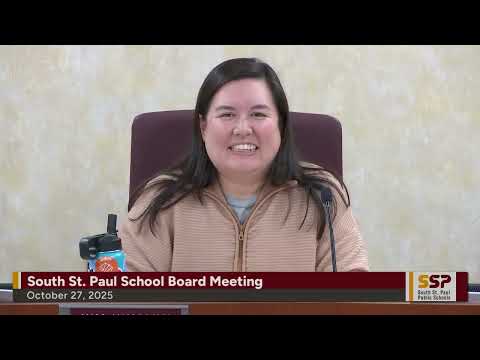
Amy Winter, executive director of educational services, told the school board Monday that the district’s renamed Comprehensive Achievement and Civic Readiness plan aligns state-mandated indicators with local targets and required reporting for districts receiving Title funding.
Amy Winter, executive director of educational services, told the school board Monday that the district’s renamed Comprehensive Achievement and Civic Readiness plan (formerly "World’s Best Workforce") aligns state-mandated indicators with local targets and required reporting for districts receiving Title funding.
The plan sets five goals: all children ready for school; closing racial and economic achievement gaps; college and career readiness; all students graduate; and a new objective that students be prepared to be lifelong learners. "When we talk about kids being ready for school, it's really are our schools gonna be ready for the kids that are coming? Because they are coming. Like ready or not," said Kristen, who presented the early-learning portion of the report.
Why it matters: the state reviews the plan on a three-year cycle and the district’s performance affects federal Title funding and public reporting. Winter said the district moved reading performance reporting to the Read Act and updated other measures accordingly.
Key findings and actions
- Kindergarten readiness and preschool: Preschool developmental-assessment gains were reported (Teaching Strategies GOLD data) and math screening (FAST) showed incremental progress. Administrators said the district aims to screen kindergartners within the state-mandated 30-day window and proposed forming a kindergarten transition team to share preschool screening data with teachers and plan targeted professional development.
- Closing gaps and interventions: Natalie (secondary-focused staff) summarized subgroup trends and said incremental growth occurred but did not meet preset targets. "We need some students to make one more than a year of growth in a given school year" to close gaps, she said. Planned actions include using assessment data to drive instruction, targeted intervention classes, expanded academic supports and culturally specific supports funded through Achievement and Integration dollars.
- College and career readiness: The district set a goal that 80% of seniors will have a detailed postsecondary plan (work, military, trade, two- or four-year college) and will expand use of Xello, an online career-exploration and planning tool, to document and track plans.
- Graduation monitoring: Winter and Natalie reviewed four-year graduation trends (district missed its targeted short-term increase), noting the district also monitors a seven-year rate and will continue credit recovery options and scorecard tracking to identify at-risk students earlier.
- Digital citizenship: Tom, the district’s technology director, introduced a new lifelong-learning goal focused on digital citizenship using Common Sense Education curriculum K–12. "We really want to provide a way to help students understand what that looks like, how they can utilize information online, engage with media in responsible, respectful ways," he said. The district will track lesson delivery and use quizzes and teacher feedback to measure uptake.
Other context: presenters reviewed the Achievement and Integration three-year plan and its culturally specific strategies (cultural liaisons, anti-bias curriculum, targeted mentoring and affinity groups) intended to improve outcomes for Hispanic/Latino and Black/African American students.
Board discussion and next steps
Board members asked about outreach for preschool screening (staff use monthly birth data from the Department of Health and census information and send postcards and event outreach), counselor capacity to document seniors' plans (district counselors and a college-and-career coordinator will support Xello use), and whether targeted supports would reduce services for high-achieving students (administrators said they are expanding accelerated and GT programming while also increasing interventions).
The district will post full data online and plans to submit required state reports; staff said additional professional development, walk-throughs and implementation checks will follow to ensure curricula are delivered with fidelity.
Ending
Board members thanked staff for the presentation and asked for continued updates as action steps (transition team, Xello rollout, credit-recovery plans and digital citizenship implementation) advance.