Get Full Government Meeting Transcripts, Videos, & Alerts Forever!
Get email alerts on the Municipal Finance topic
No spam. Unsubscribe anytime.
Midyear review: Streator reports stronger sales-tax receipts and improving pension funding
Summary
City auditors presented a midyear financial review showing higher-than-expected sales-tax receipts, stronger ambulance-billing revenue, and improved pension funding percentages for police and fire; staff cautioned that some revenues (property taxes, hotel/motel) are subject to timing.
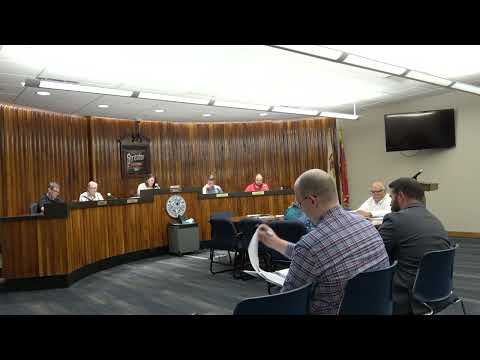
City finance reviewers presented a midyear fiscal review showing generally favorable finances through the first six months of the fiscal year.
Presenter Steve Lickow of Letterbeck and Ammon, LLC told the council that the draft audit for fiscal 2024 appears generally favorable, with governmental funds showing aggregate increases and proprietary funds (sewer, solid waste, golf course) also up in net position. Pension funding ratios continued to rise: police funding exceeded 51% and fire funding exceeded 41%.
Lickow highlighted that general-fund cash totaled about $2.2 million as of June 2025 and that overall revenues are slightly ahead of expectations through midyear. Sales tax was singled out as the largest and strongest revenue source: monthly receipts rose from about $170,000 historically to roughly $212,000, an increase that translates to about $600,000 annually compared with past years. Ambulance-billing revenue was also ahead of expectations, though staff noted a state payback (GBMT) would produce an adjustment.
The presenters cautioned that some revenue lines are driven by timing. Property taxes are generally received July–December and certain hotel/motel revenues may be down by timing and could come in short of budget. The sewer enterprise appears healthy in aggregate despite some individual subfunds showing negative operating balances because capital and construction funds hold reserves. Several funds were budgeted with planned deficits to cover capital initiatives; planned transfers remain contingent on those capital projects proceeding.
Council members asked questions about the timing of receipts, the effect of state replacement-tax adjustments (noting a 2022–23 spike that later moderated), and the effect of state changes converting some use-tax transactions into sales tax. Staff said the conversion helped explain recent increases in sales tax and concurrent drops in use tax collections.
The presentation concluded with staff indicating they would return with routine updates on the schedule and that auditors are preparing the final fiscal-2024 audit.