Get AI Briefings, Transcripts & Alerts on Local & National Government Meetings — Forever.
Consultants recommend highway alignment for Tweetsie Trail segment; public meeting, easement negotiations next
Summary
Consultants working on the Tweetsie Trail master plan told the Carter County Commission they recommend following the former highway alignment in several places rather than the old railroad route because of safety, easement and constructability concerns.
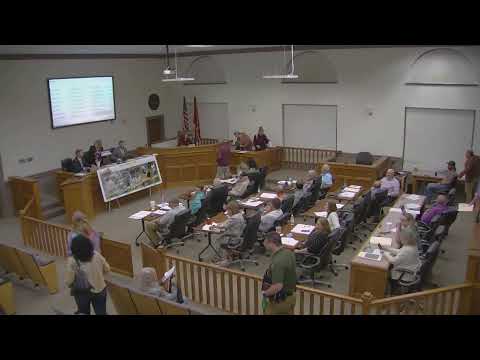
Consultants working on the Tweetsie Trail master plan presented a progress update to the Carter County Commission, recommending that the county favor the former highway alignment over the historic railroad route for several segments.
The consultant, identified in the meeting as David, said, “So all of these things taken together suggest that the best route is to follow the old highway route.” He described specific safety and constructability issues on the railroad alignment, including sections that would place pedestrians immediately behind the Highway 19E guardrail and areas with eroded banks that would require stabilization.
Why it matters: the choice of alignment affects cost, right‑of‑way needs and safety planning. The presentation included concept‑level cost columns and segment descriptions for Elizabethton, the highway alternate, Valley Forge alternates, county land and Hampton, and noted that the project would be phased and funded over time rather than built all at once.
Key design features discussed included geotextile bags to stabilize eroded banks, a pedestrian bridge at the former railroad bridgehead clad in siding and painted a brick red tone, overlooks at the bridgehead and measures for protecting and lighting a historic tunnel. The presenter said the tunnel should be protected with “some kind of netting, rock anchored so that rock can't fall on pedestrians” and that it would be lit for pedestrian safety.
The consultant reviewed a concept‑level cost estimate and project totals for each segment (survey, geotechnical engineering, permitting, legal/easement documentation, design and construction). A figure shown during the meeting was cited by a participant as approximately $22,700,000; the presenter cautioned the total ‘‘could be higher than that, depending on how the alternates and the primary route are configured.’’
Easements and legal constraints were raised repeatedly. The presenter said portions of the original railroad route through the Valley Forge segment include a water line and a utility easement that staff told the consultant was “not useful as a recreation easement,” meaning the county would likely need to negotiate additional recreation easements or use an on‑road shared alternative on Mill Pond Road.
TDOT participation: commissioners asked about coordination with the Tennessee Department of Transportation for segments along Highway 19E. The consultant said TDOT staff had participated in preliminary meetings and provided guidance that is being incorporated into the highway alignment design.
Next steps and public engagement: the consultant said a first public meeting will present the primary and alternate routes and solicit public preferences; detailed design and cost materials will be distributed afterward. He asked commissioners to submit detailed questions in writing to the mayor so staff can follow up.
Public supporters: members of the local trails community told the commission they support moving shovel‑ready trail projects while the larger master plan advances. Abraham McIntyre of the Southern Off Road Bicycle Association urged the county to release funds for the Hampton Watershed Trails and a Progression Bike Skills Park, calling those projects “engineered and shovel ready.”
The presentation closed with the consultant reiterating that the master‑plan work is intended to provide options and cost information to let elected officials and the public decide which phases to implement.